Why I Buy Vaisala Sensors Even When They're Not the Cheapest Option
As the person signing off on purchase orders for a 120-person engineering firm, I've learned one lesson the hard way: the cheapest price tag at the moment often turns into the most expensive purchase we make all year. It's not because cheap products always fail. It's because we rarely account for the costs that come after the invoice: installation, calibration, downtime, and the quiet frustration of our engineers when a sensor drifts out of spec.
I started managing procurement in 2020. Roughly $500K a year across 15 vendors, processing 60-80 orders annually. You start noticing patterns pretty fast. Here's a pattern I wish I'd noticed sooner: every time we chose a quote purely on price, we paid more later—just not on the original invoice. Actually, that's not entirely true—we did have a few wins with cheap products too. But the losses outweighed them by a wide margin.
Here's the thing: total cost of ownership (TCO) is not a buzzword. It's a practical filter. I now calculate TCO before comparing any vendor quotes. That means adding up unit price, shipping, setup fees, calibration, expected lifespan, and the likely cost of failure—downtime, rework, and troubleshooting. In this post, I'll walk you through a few examples from my own purchase history to show what I mean.
Vaisala RH Sensors: The Deviation Example
Take our humidity sensor purchase from a couple of years ago. We needed several vaisala RH sensors for a stability chamber—actually, we didn't specify Vaisala initially. One supplier offered a similar-looking sensor at 30% lower cost. I signed off. Three months later, we had a batch of pharmaceutical packaging that failed stability testing because the humidity readings were off by 5% RH. The cheap sensor had drifted well beyond its tolerance.
Why did I sign off on it? Because I assumed "same specifications" meant identical results across vendors. Didn't verify. Turned out each had slightly different interpretations of accuracy and drift. The recalibration fee, the rejected batch, the engineer's overtime—that cost us close to $8,000. A Vaisala RH sensor from an authorized distributor would have been around $1,200, and its published long-term stability is typically within ±1% RH over two years. Simple math. But it took that failure to teach me the real difference between a quality sensor and a cheap clone.
(Should mention: we also had success with some low-cost sensors in non-critical areas. But the expensive failures outweighed those savings by a large margin.)
HPLC Columns: The Price-Per-Run Math
Our lab also goes through HPLC columns regularly. For years, we bought cheaper columns from a generic supplier because the upfront price was attractive. But after a while, we noticed our method separations weren't as sharp. Peaks tailed, retention times shifted, and we had to repeat runs or extend gradients to get usable data. The solvent waste and analyst time added up quickly. The question isn't "What does this column cost?" It's "What does this column cost per successful analysis?"
When I finally compared numbers, the premium column was actually cheaper. It lasted longer, gave reproducible retention times, and didn't require troubleshooting after every sequence. Now, I don't buy HPLC columns without checking the number of theoretical plates and the supplier's batch-to-batch consistency. The purchase price is only the beginning of the cost of ownership.
Load Cells and Inductive Sensors: The Hidden Cost of Downtime
Another example: load cells for our automated filling line. We needed a replacement load cell, and the online marketplace had a "compatible" one at half the price of the original brand. It worked for about six weeks, then it started drifting. We got wrong fill weights for an entire shift before someone caught it. That cost us $3,600 in rework—not counting the lost line time, which is hard to quantify but real.
Similarly, IFM inductive sensors are often viewed as "premium" components. But when a cheap sensor fails, it can shut down a conveyor. The PLC error needs troubleshooting, the maintenance crew gets pulled from another project, and the day's goal slips. Real talk: we've had more emergency maintenance calls from cheap sensors than from any other component type. Buying the original IFM part is a form of insurance. And when we need replacements, I always search for "where to buy IFM inductive sensors online" from an authorized distributor, not just the cheapest listing.
Yes, Budget Constraints Are Real
I can hear a few procurement people saying, "Yes, but our budget only allows so much." I get it. I've been there. For years, I was told to cut costs, and my instinct was to squeeze vendors. But what I've learned is that TCO thinking is not about buying the most expensive option; it's about quantifying the risks you're taking.
If you genuinely can't afford the premium part upfront, then at least identify which components are mission-critical and which are not. For the critical ones, consider leasing, or negotiate a service contract that includes calibration and replacement. For the non-critical ones, a cheap alternative may be fine. But don't let the unit price blind you to the total cost. I'd rather tell finance we spent $1,500 on a sensor than explain why we lost an $8,000 batch to a $300 sensor.
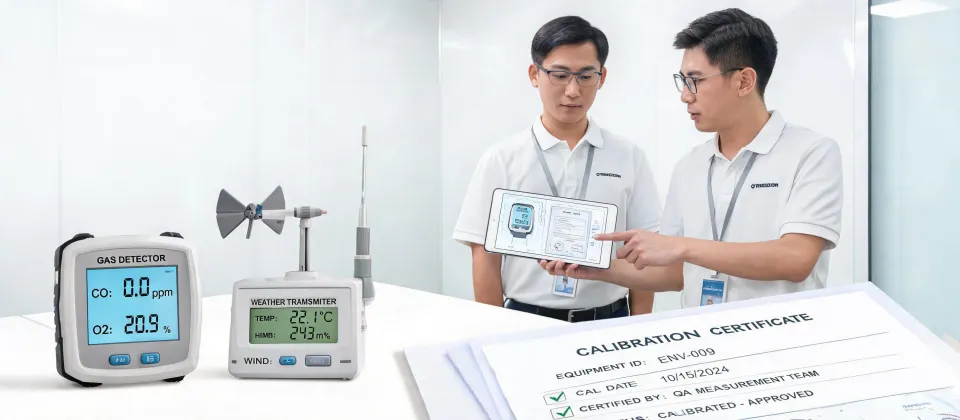
Also, it's worth checking whether your supplier can provide proper documentation, like NIST-traceable calibration certificates. That's something I never used to think about until an auditor flagged it. Now it's a standard item on our vendor checklist.
My Final Take
I'm not saying Vaisala is the only brand that works, or that every expensive product is worth it. But if you're evaluating vaisala hygrometers, HPLC columns, load cells, or IFM inductive sensors, take a moment to calculate the true cost of getting it wrong. This pricing and performance data reflects our experience as of late 2024—things change, so verify current specs before you commit.
That's the number that matters. Because the invoice is not the final cost—it's just the down payment.

Marcus Feld
Marcus Feld is an electrical test and measurement analyst specializing in multimeters, oscilloscopes, clamp meters, insulation testers, spectrum analyzers, and data loggers. He applies IEC 61010-2-030 and IEC 61010-031 concepts while examining measurement category, bandwidth, true-RMS response, input loading, and stated uncertainty. His work helps maintenance engineers and test teams choose safe instruments with performance suited to the signals and environments they actually measure.