The Admin Buyer's Checklist for Mitutoyo Calipers, Micrometer Sets, and Fluke Meters
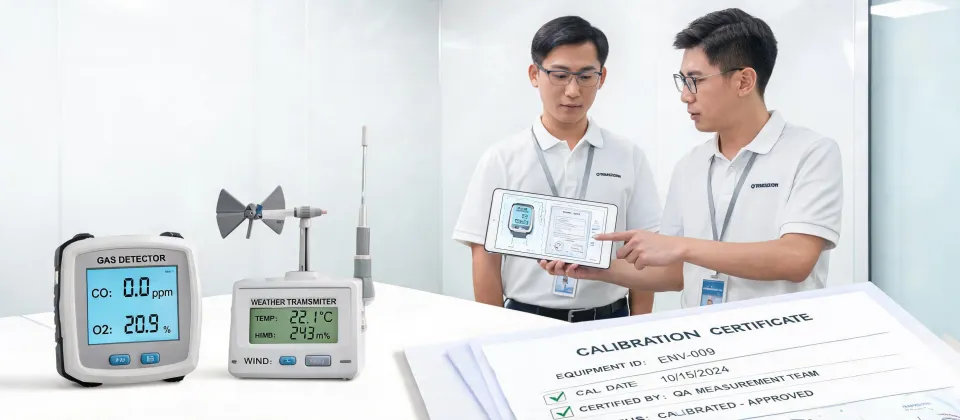
When a quality or maintenance team requests a Mitutoyo caliper, a 0-12" micrometer set, a 336 clamp meter, or an IR thermometer, the line items look straightforward. They aren't. Each one carries a different calibration burden, a different data trail, and a different answer to "what happens when it breaks."
I get tickets that read like a wishlist: "Mitutoyo 0-12 micrometer set, digital caliper with data output, a 336 clamp meter, an IR thermometer, and which Fluke multimeter do I need." From the outside, that's just five tools with model numbers. The reality is that each line carries a different calibration burden, a different data trail, and a different answer to what happens when it breaks.
My rule after nine years of processing these requests: I don't approve a single line item until I can answer three questions about it—tolerance, data handoff, and calibration owner. Brand and price come after that, not before. The tool that's hardest to replace isn't the most expensive one—it's the one nobody logged the calibration schedule for.
Where this is coming from
Context, so you know I'm not just guessing: I'm the office administrator for a 220-person manufacturer. I handle all MRO and capital-equipment ordering—roughly $340k a year across 14 vendors—and I report to both the operations director and the controller. If an invoice doesn't reconcile at month-end, I'm the one on the phone.
When I took over purchasing in 2020, the tool crib was a filing cabinet full of spec sheets with no dates. Two of the digital calipers on the shelf had calibration stickers from 2018. The quality manager found out during an audit, and I spent a very long afternoon explaining why I couldn't produce a single traceability record.
Why the brand question is really a spec question
Here's the thing: Mitutoyo isn't the safe default because of the name—it's the safe default because their published specs survive an audit. A Mitutoyo digital caliper with data output doesn't just read a number; the SPC output lets you log the reading into a spreadsheet without a transcription step. That's the part that matters to your quality team, not the badge on the case. Their calipers are typically built to DIN 862 and their micrometers to ISO 3611, which is the vocabulary your calibration lab is already using.
The 0-12" micrometer set follows the same logic in a different format. Three micrometers that cover the full range mean one purchase order, one calibration schedule, and one set of certificates. If you buy four individual mics from three vendors to save a few dollars per unit, you've created three times the paperwork. Not a deal-breaker, exactly—but it's the kind of small decision that eats a week six months later.
What most people don't realize is that calibration documentation is where the real cost lives. A caliper without a certificate of calibration is basically a fancy clamp. Most manufacturers recommend a 12-month calibration interval, and NIST-traceable certificates are the standard auditors look for. If the vendor can't state the certificate's traceability path on the quote, that's a red flag—not because they're necessarily shady, but because it means somebody has to chase it down later. Usually me.
The Fluke question is genuinely a different question
Electrical measurement isn't the same category as dimensional measurement, and I wish more people asked me before mixing them on one requisition. A 336 clamp meter isn't a "better multimeter." It measures current without breaking the circuit, at a rated accuracy that depends on jaw design and true-RMS electronics. The Fluke 336 is a 400A true-RMS clamp, which is the right tool for motor and panel diagnostics. If your ticket asks "which Fluke multimeter do I need," that usually means nobody has defined the job yet.
This is where I've started pushing back on requisitions. I ask the requester to write one sentence: "I need to measure ___ to within ___." If they can't fill in both blanks, I send it back. Not to be difficult—because the wrong model costs more to return than the right model costs to spec. I'd rather spend ten minutes explaining the difference between a clamp meter and a handheld DMM than a month chasing a restocking fee.
The invoice problem nobody warns you about
In 2022, I found a great price on a micrometer set from an unfamiliar distributor—about 30% under our regular supplier. I ordered two. The shipment arrived fine. The invoice was a handwritten receipt. Finance rejected the expense report outright, and I ate the $1,480 out of the department budget while I argued with the vendor for six weeks.
Now I verify three things before placing any instrument order: that the vendor can issue a proper invoice, that they can provide the NIST-traceable certificate, and that they'll accept returns on unopened calibration items. Looking back, I should have asked for a sample invoice before ordering. At the time, the price was the only number on the page I knew how to read.
Where the simple version breaks down
None of this applies if you're buying a $40 IR thermometer to check HVAC vents in an office. Buy the cheap one, replace it when the emissivity errors annoy you. The spec-and-certificate conversation starts when the measurement feeds a decision—incoming inspection, final QC, a customer's audit. The IR thermometer is a screening tool, not a metrology instrument, and treating it like one is how people end up arguing with a supplier over 2°C.
Same for the calipers. If the shop floor is measuring wood or sheet stock to ±0.5mm, a Mitutoyo is probably overkill. The case for the brand is when the tolerance is tight, the data has to be logged, and someone downstream will ask you to prove the reading came from a calibrated device. Outside those conditions, pay for the precision you actually need—not the precision on the brochure.
One more thing I've learned the hard way: calibration lab turnaround matters as much as the tool's accuracy. If you're running three shifts and your only 0-12" micrometer set goes out for two weeks, the production line feels it. Plan for one spare or a loaner agreement with the lab. That line item never appears on the requisition, and it's the one that gets me called into the operations meeting.

Caleb Whitaker
Caleb Whitaker is a weighing and force measurement analyst covering analytical balances, precision balances, bench and platform scales, checkweighers, load cells, force gauges, and weighing indicators. He uses OIML R 76, OIML R 51, and OIML R 60 criteria to compare verification scale intervals, repeatability, eccentric loading, creep, throughput, and environmental influence. He helps production, laboratory, and procurement teams distinguish legal-for-trade requirements from process-control needs and choose suitable calibration and acceptance tests.