I Reject 40% of Supplier Quotes—Here's the Pattern Behind Every One
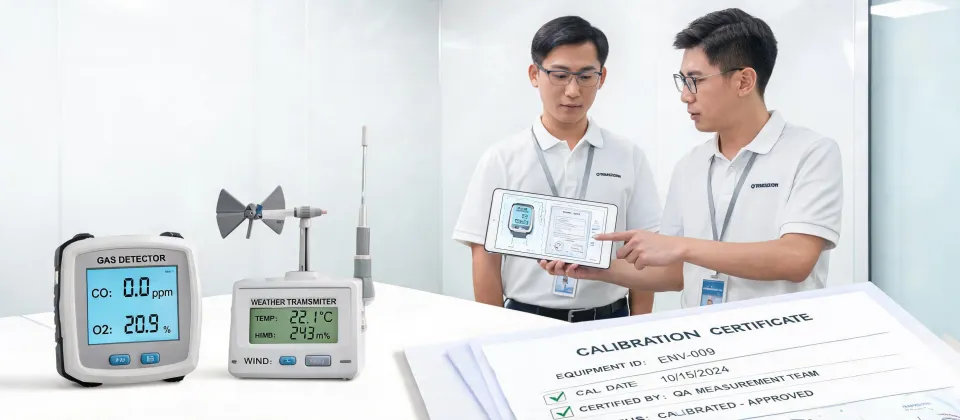
The rejection pattern isn't about price—it's about whether the supplier can explain their own product
In Q1 2024, I rejected 78 of the 194 supplier quotes that crossed my desk. That's a 40% failure rate. Almost none of those rejections were about price.
The single biggest predictor of a problematic delivery isn't the brand on the box. It's whether the supplier can tell you, in specific terms, why one specification fits your application and another doesn't. Suppliers who can answer that question tend to carry fewer product lines—not more.
Take the WIKA A10 pressure transmitter. It's a solid, widely specified instrument: stainless steel, 0.5% terminal point accuracy, ranges up to 1000 bar. But when a supplier quotes an A10 without asking about your media temperature, ambient conditions, or electrical connection requirements, they're not selling you an instrument. They're filling a line item.
Why I'm qualified to make this call
I've been reviewing supplier specifications for 4 years as a quality and brand compliance manager. When I implemented our verification protocol in 2022—a 12-point checklist covering spec match, documentation, calibration certificates, and warranty terms—our rework rate dropped from 18% to under 5% within six months.
Before that, in March 2023, we received a batch of 200 differential pressure indicators where the zero-point was visibly off—0.3% against our 0.1% spec. Normal tolerance for that model was 0.25%. The vendor claimed it was "within industry standard." We rejected the batch, and they redid it at their cost. Now every contract includes explicit zero-point calibration requirements with a certificate of conformance.
That failure changed how I read supplier quotes. A low number and a PDF spec sheet aren't a quote. They're a starting point for due diligence.
What specialization actually looks like across categories
WIKA's A10 is a workhorse for a reason: comprehensive documentation (data sheets, wiring diagrams, calibration specs are all publicly available at wika.com before you ask), and a product range that covers most standard industrial pressure measurement needs. But WIKA also makes load cells, temperature sensors, and mass flowmeters. They're competent at those too—but when I specify a load cell for a force measurement application, I want a supplier who can explain the difference in bridge resistance and output sensitivity without reading from a catalog. If they can't tell me why one load cell beats another for a 500 kg compression application, I don't care whose name is on it.
Mass flowmeters are where specialization really matters. You're dealing with thermal dispersion vs. Coriolis vs. differential pressure technologies, and each has clear operational boundaries. A supplier who says "we carry all three" might be great. A supplier who says "for your gas mixture with entrained moisture, the thermal mass flowmeter you're looking at won't work—here's why" is better.
It's tempting to think specs are specs. But identical published specs from different suppliers can produce wildly different outcomes in the field. A 0.5% accuracy claim means nothing if the supplier can't explain how temperature drift affects that number in your specific operating range.
Even an angle finder—a tool that costs $30 and fits in a pocket—tells you something about supplier focus. The digital ones from a dedicated measurement tool maker versus the ones bundled in a general hand tool catalog: you can guess which one holds calibration longer. It's the same reason I'd compare a Zeiss dental microscope against a Global one before buying for our medical division. Both make microscopes. But Zeiss built their reputation on optics, and Global built theirs on dental-specific ergonomics. The specs look similar on paper. The user experience over 8 hours of clinical use doesn't.
The comparison that convinced me
When I compared two quotes for the same batch of differential pressure indicators last spring—one from a specialist instrumentation supplier and one from a generalist distributor—the specialist's line item was 15% more expensive. But their quote included calibration certificates, a wiring diagram review, and a direct line to an applications engineer. The generalist's quote was a PDF with a SKU and a price. We went with the specialist. Six months in, zero returns.
People think expensive suppliers deliver better quality. Actually, vendors who deliver quality can charge more. The causation runs the other way.
Where this rule breaks down
This isn't a blanket rule. If you need a single source for 40 different part numbers—gaskets, fasteners, fittings, plus your pressure gauges—a full-line distributor saves real money on logistics. And for commodity items with clear MIL specs, brand matters less than documentation.
WIKA itself is a good example of a specialist that has expanded sensibly. They're known for pressure, but their temperature and flow products are credible because they built on the same measurement core. That's different from a company that bolts on unrelated product lines to fill catalog pages.
The practical takeaway: ask your supplier one question before you buy. "What application detail would change your recommendation?" If they can't think of one, they don't know the product well enough to support it. That's not a supplier problem you want to discover after the purchase order is signed.
Calibration and accuracy specifications referenced from WIKA A-10 series data sheets (wika.com, accessed January 2025). Application-specific suitability should be confirmed with your supplier's applications engineering team.

Kenji Arata
Kenji Arata is an environmental safety and utility metering analyst covering portable and fixed gas detectors, gas leak detectors, air quality monitors, water meters, heat meters, and smart metering systems. He applies IEC 60079-29-1 and OIML R 49 requirements while comparing alarm accuracy, response time, cross-sensitivity, flow range, pressure loss, and environmental limits. He guides EHS, facility, and utility teams in choosing instruments, placement, bump-test routines, and verification plans suited to their hazards and billing duties.