Vaisala Temp and Humidity Sensor: The Emergency-Replacement Playbook
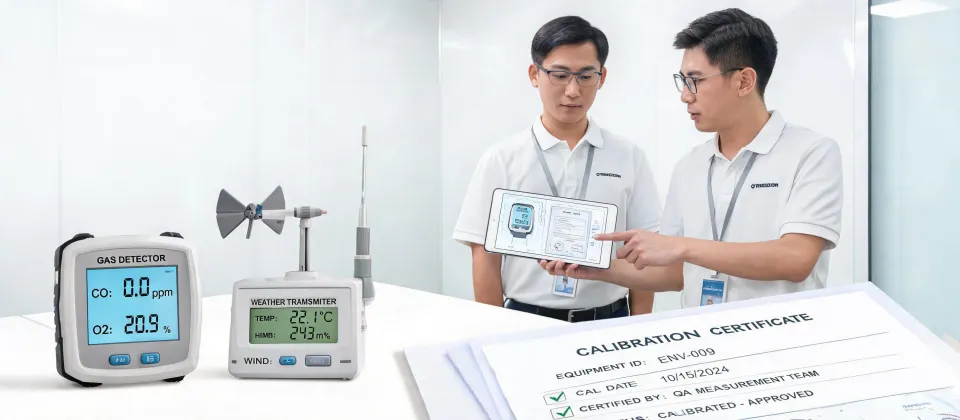
Let’s not spend two paragraphs on small talk. If a Vaisala temp and humidity sensor is failing in a process that cannot wait, and you’re counting hours instead of weeks, the conclusion I give every caller is simple: read the full model code and find the matching Vaisala temperature and humidity sensor manual before you order the replacement. Most rush replacements fail because of the configuration, not because of the courier.
I’m an applications engineer at an industrial instrumentation service company. Since 2019, our team has handled more than 200 urgent sensor requests—maybe 180, I’d have to pull the spreadsheet to get an exact number—and the pattern is consistent. People lose time because they copy only part of the label, then order what looks like the same sensor but isn’t. The courier delivers on time and the job still stops. Why does the manual matter? Because in an emergency, assumptions are expensive.
Why I open the manual before I open my mouth
It sounds counterintuitive. A transmitter stops making sense, the process engineer is under pressure, and the instinct is to buy hardware, not read a PDF. Here’s the thing: Vaisala product families can look similar at a glance, but the model code defines details like the electrical output, the filter, and the probe options. The manual tells you what those details mean. Without it, you don’t know whether the replacement matches the existing loop or only looks like it from the front.
Searching for a Vaisala temperature and humidity sensor manual does not mean you need to read one hundred pages. In an emergency, the useful parts are the technical data, the spare-parts list, and the section that explains the options in the model code. That is maybe twenty minutes of reading. Compared with the cost of a wrong overnight shipment, it is cheap.
A correct order placed on Tuesday evening arrives before a wrong order placed on Tuesday morning.
In March 2024, I helped a pharma facility that had thirty-six hours before a quality audit. The maintenance lead was about to send a purchase order for a replacement transmitter. When we looked at the manual for the installed model, the option table made us realize that the model code on the label included a non-standard output configuration. The stock unit the distributor had would not have worked. We caught it before the order went out, but only because we checked the manual first.
The emergency replacement checklist I actually use
Here is the sequence I use when a site needs a Vaisala sensor replaced quickly:
- Copy the complete model code from the physical label. Do not write down only the product family name. The full code contains the configuration information you need. If the label is damaged, check the calibration certificate that came with the device.
- Open the manual for that exact model. Vaisala’s support pages let you search by product name. Skip the general brochure and go to the technical data or options section.
- Confirm the output type before you confirm the shipping method. Ask the supplier whether they have the exact model code, not “something similar.” If they offer a compatible unit, ask them to send the code in writing and compare it with the manual.
- Take photos of the label and the installation. A distributor or technical support person can often confirm the correct replacement from a photo faster than from a phone description. This step has saved us multiple long email loops.
- Decide how you will verify the new sensor before installation. In regulated facilities, the calibration certificate matters more than the delivery promise. Make sure the documentation will be accepted by whoever reviews it.
I’m not saying every failed sensor needs a full manual review. I am saying that the manual review is where the time investment pays off. In our internal log last year, we processed 47 rush requests, and three of them turned out not to need a new sensor at all. The manual’s troubleshooting guide helped us find contamination or wiring problems before anyone spent money on unnecessary hardware.
Where I draw the line
I also want to be honest about what this article is not. Measurement expertise does not automatically transfer from humidity and temperature to every other sensor on your skid. If the failed instrument is a conductivity sensor, the replacement process is different: a conductivity sensor measures dissolved ions in a liquid, while a humidity sensor measures water vapor in air or other gases. The general advice about model codes and manuals still applies, but the technical details, calibration methods, and application issues do not. That is a question for someone who works with liquid analysis every day.
And if you found this page while looking for a pico microscope, or trying to answer a comparison like zeiss vs global dental microscope, I’m not the right person. I don’t have enough daily experience with optical instruments to give you a trustworthy opinion. A sensor engineer who pretends to be a microscope expert is exactly the kind of supplier you should avoid.
The reason I mention this is not modesty. It is usefulness. The instrument people I trust most are the ones who tell me what they cannot help with before I waste a week asking. That is the boundary I try to work within.

Marcus Feld
Marcus Feld is an electrical test and measurement analyst specializing in multimeters, oscilloscopes, clamp meters, insulation testers, spectrum analyzers, and data loggers. He applies IEC 61010-2-030 and IEC 61010-031 concepts while examining measurement category, bandwidth, true-RMS response, input loading, and stated uncertainty. His work helps maintenance engineers and test teams choose safe instruments with performance suited to the signals and environments they actually measure.