Vaisala Hygrometer or Dewpoint Transmitter Failing? Triage the Signal Before You Rush a Replacement
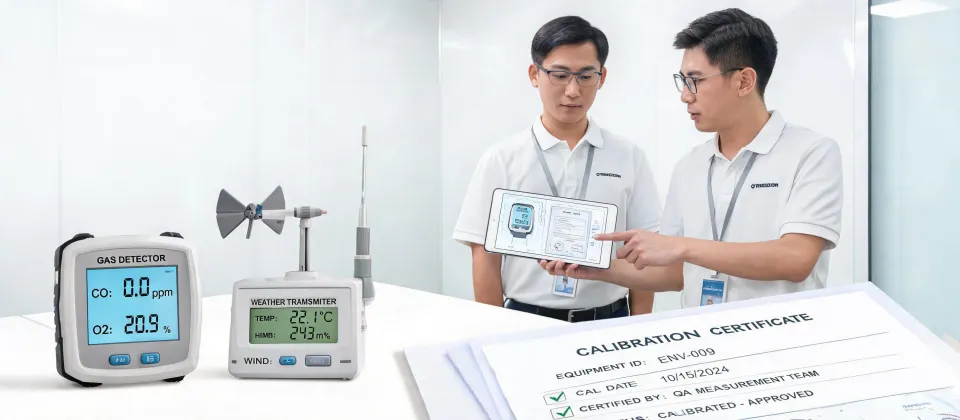
If your Vaisala hygrometer or Vaisala dewpoint transmitter suddenly reads out of range, the quickest fix is usually not an overnight replacement. In the 200-plus urgent instrument calls I've coordinated, most of them ended with a 15-minute field check instead of an order. Plenty of 'failed' transmitters were doing exactly what they should, and the process, wiring, or probe filter was the actual problem.
I coordinate urgent support for process plants running Vaisala measurement technology, and my first answer to every rush call is the same: verify the reading before you verify the shipping address. That habit has saved more downtime and more money than any express freight option I know.
Example: In March 2024, a water treatment plant called at 2 p.m. on a Thursday. The dewpoint transmitter on their compressed-air dryer had moved from -40 °C to -5 °C, and an environmental audit was scheduled for Monday. They asked me to get a calibrated replacement Vaisala dewpoint transmitter to site by Friday. Normal lead time was four business days. Express meant air freight plus a rush premium.
I went back and forth on that for about an hour. Expediting was the safe, conventional answer: replace the instrument, clear the alarm, look like a hero. But my gut said the instrument was telling the truth, so I asked the engineer to put a multimeter on the 4-20 mA loop instead.
The current signal matched the -5 °C the display was showing. The sensor hadn't failed. The air really was wet. The desiccant inside the dryer was exhausted. One regeneration later, the dewpoint dropped back toward -40 °C, and the audit passed with no replacement order at all.
The surprise, for me, was how often that pattern repeats. I never expected a 'dead' transmitter to end up being the most reliable component in a dried-air system, but it happens often enough that I now start every emergency from the sensor, not the shipping dock.
How to Use a Multimeter on a Transmitter Loop
When technicians ask me 'how to use a multimeter to check a transmitter?', what they're really asking is how to do it without making things worse. Most of us learned meter basics on batteries and resistors—I did too. A live 4-20 mA loop is different. Actually, the meter isn't different; the setup is.
Most Vaisala hygrometers and dewpoint transmitters output a linear 4-20 mA signal across the configured range. A healthy instrument sends the same information to its display, the PLC, and your handheld meter. When the numbers disagree, you've found the fault layer.
A simple method for a 4-20 mA output
- Set the multimeter to measure DC milliamps.
- Disconnect or isolate the loop according to your site's lockout/tagout procedure. Do not break a live loop in a classified area without authorization.
- Connect the meter in series with the loop current. Current measurement is always in series; putting a mA meter across the terminals in parallel is the classic way to blow the meter fuse.
- Compare the measured current with the transmitter's configured range.
Here's the mental math. Suppose a Vaisala dewpoint transmitter is configured for -60 to +20 °C dp. That's an 80-degree span carried by 16 mA, which works out to 0.2 mA per degree. A genuine -40 °C dewpoint should produce 4 mA plus 20 × 0.2 mA = 8.0 mA. If you read 12.0 mA instead, the signal says the dewpoint is closer to -20 °C. Either the process is wet, the probe is contaminated, or the sensor has drifted. If the measured current agrees with the display, trust the instrument and look upstream.
If the loop is healthy but the reading is still unstable, the next suspects are a blocked or contaminated probe filter, moisture in the connector, or sensor age. Looking back, I should have asked for a photo of the instrument's type code before ever discussing a replacement. Models that look identical on the outside can have different ranges and process connections, and the type code settles that in seconds.
A Vaisala Hygrometer and a Dewpoint Transmitter Are Not the Same
People use the two terms as if they were interchangeable, and the confusion produces a stream of wrong emergency orders.
A Vaisala hygrometer measures relative humidity and temperature, usually with a capacitive thin-film polymer sensor. That's the instrument you see in HVAC ducts, pharmaceutical storage, cleanrooms, and weather stations. It answers the question 'how humid is the air?' in percent RH.
A Vaisala dewpoint transmitter measures the temperature at which water vapor starts to condense. That is the number that matters for compressed air, medical gas, natural gas, and dry rooms, where trace moisture can ruin product or equipment. Per ISO 8573-1:2010, compressed air purity classes specify pressure dewpoint limits, so an audit about compressed air quality is likely to be about dewpoint, not percent RH.
Before you order, find the type code printed on the label. It tells you the measurement principle, probe family, output, and pressure rating. Matching those details matters more than matching the brand. A hygrometer that worked fine in a cleanroom may not survive a compressed-air line, and a dewpoint transmitter can be overkill for a humidity control application.
Price Is Not the Cost of a Wrong Measurement
The first question on any urgent call is price. I get it. You can compare encoder price lists, find a $20 humidity module, and wonder why a Vaisala transmitter costs twenty times as much. In some applications that cheap module is fine. In process control, the real cost is rarely the sensor's price tag.
An undetected measurement error costs energy, scrapped batches, or a failed audit. The cheapest route is only cheap when the instrument tells the truth—and when you can prove it after the fact. Calibration certificates, authorized parts, and reliable specifications are part of the total cost, not optional extras.
As of January 2025, Vaisala pricing depends heavily on configuration: range, output, probe length, and materials. I'm not going to invent a number for you. Get the type code, ask an authorized distributor for a quote against that exact code, and treat anything far below it with suspicion.
Buy from an Authorized Source
When downtime is on the clock, the temptation is to search for the nearest online store and click buy. I've seen what that gets people: grey-market instruments without valid certificates, old stock that sat on a shelf for years, and boxes whose serial numbers don't match the unit inside.
There's a useful mental model from the optics world. A scientist about to spend serious money on a microscope doesn't just ask whether a dealer has the brand in stock; they ask, 'Is Microscope World an authorized Zeiss dealer?' Dealer authorization affects warranty, genuine parts, and support. The same question applies to measurement instruments. If you're replacing a Vaisala hygrometer or dewpoint transmitter, confirm the supplier is an authorized Vaisala distributor, then verify the serial number when the instrument arrives.
When Rush Replacement Actually Makes Sense
After the multimeter check, after confirming the process, and after checking the spare parts cabinet, if the sensor itself is still the suspect, expediting is the right call. That's the case for verified sensor failure in a critical application with no spare on site, or physical damage from contamination or a power event that has pushed the instrument past its service life.
Rush replacement is usually wasted money when the diagnosis is fuzzy. If you're unsure whether the transmitter or the process is to blame, the fastest freight in the world only delivers an expensive unknown to your doorstep. Ordering the wrong type code makes it worse—I learned that with a same-day shipment that had to go straight back because the process connection didn't fit.
A final honest note: a new instrument does not remove the need for calibration. Every transmitter drifts, including ours—that's physics, not a flaw. Most industrial applications run on a one- or two-year recalibration cycle, and an authorized service lab can supply a certificate with NIST-traceable references. If your quality system requires traceable readings, budget for that from the start.
So here's the sequence I use on every urgent call. In this order.
- Measure the mA loop and compare it with the display and process conditions.
- Confirm whether you actually need a hygrometer or a dewpoint transmitter.
- Read the type code before discussing a quote.
- Verify the supplier is authorized to sell Vaisala products.
- Only then decide whether the order deserves rush treatment.
That sequence isn't a substitute for your site's procedures; if you work under a regulated quality system, follow your validated process first. But for the rest of the urgent calls, the 15 minutes you spend on the loop will tell you whether the instrument is lying or is simply the only honest component in the system. The answer determines whether you need a box in the air—or a maintenance crew on the dryer.

Marcus Feld
Marcus Feld is an electrical test and measurement analyst specializing in multimeters, oscilloscopes, clamp meters, insulation testers, spectrum analyzers, and data loggers. He applies IEC 61010-2-030 and IEC 61010-031 concepts while examining measurement category, bandwidth, true-RMS response, input loading, and stated uncertainty. His work helps maintenance engineers and test teams choose safe instruments with performance suited to the signals and environments they actually measure.