I'm a Buyer, Not a Meteorologist: What a Vaisala WXT536 Replacement Taught Me About Weather Station Costs
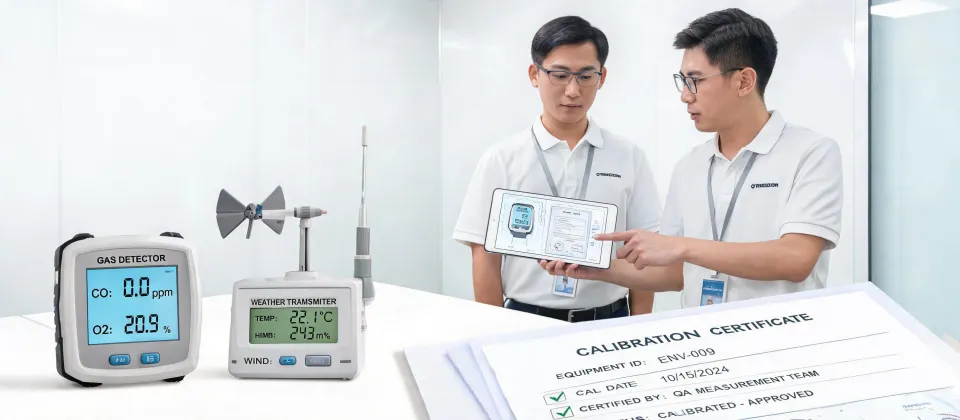
Last October, our operations manager walked into my office with a one-line request: 'We need to replace the weather station at Cedar Creek before winter.' That was it. No model number. No budget. Just a weather station that had stopped talking to the SCADA system after a lightning hit.
I've been the office administrator and buyer for a 90-person environmental services company since 2020. I manage roughly $1.2M in orders a year across about 12 vendors, and I report to both operations and finance. Most of what I buy is boring: filters, cables, calibration gas. Every once in a while I get something that makes me stop and say, 'I need a manual for this.' This was one of those times.
I'm not a meteorologist or an electrical engineer. I'm the person who makes sure the right box shows up with the right paperwork. So when the ops manager asked for a weather station, my first move was to search.
The quote shock
I searched 'vaisala wxt536 price or cost weather station' and learned something fast: there is no clean answer. No public list price. Lots of distributor pages, a datasheet, and a video review from a hobbyist who had mounted one on a barn. The Vaisala page showed the product family, but not a price.
The good news is that Vaisala is a known name. They've been making weather instruments since 1936, and the WXT536 is one of the most common all-in-one weather transmitters in industrial use. According to Vaisala's product documentation (vaisala.com), the WXT536 measures wind speed, wind direction, liquid precipitation, barometric pressure, temperature, and relative humidity in one unit. That's a big deal for a remote site because it means fewer instruments to mount, wire, and maintain.
The surprise wasn't the price. It was how much the configuration mattered. When I compared the low and high quotes side by side, I finally understood why the details matter so much in industrial purchasing. By the end of the first week, I had quotes from three suppliers. The base numbers varied by about 30% for what looked like the same model. The differences were in output options, cable lengths, mounting accessories, and whether the quote included a solar shield. The cheapest quote did not include everything the ops team needed. The most expensive one included a spare connector kit we didn't need. In the end, the cost worked out close to the middle quote after adding missing pieces to the low one and removing extras from the high one. Those quotes were from October 2024; verify current pricing before you start.
The manual that changed the order
While waiting for quotes, I downloaded the Vaisala temperature and humidity sensor manual. Yes, I read manuals. That's what happens when you've bought the wrong spare part once.
The Vaisala temperature and humidity sensor manual is not a thrilling read, but it saved us. It showed that some transmitter models have user-selectable analog outputs. The ops team assumed the sensor would arrive configured for a 4-20 mA loop by default. The manual made it clear we needed to specify that at the time of order. If we hadn't, we might have received a sensor set for a different output scale. That would have meant an extra signal converter, a second order, and a two-week delay.
I also found the WXT536 user guide and checked the wiring section before approving the PO. That might sound obvious, but in a busy month it's easy to let the salesperson say, 'it works out of the box.' Sometimes it does. With these instruments, 'out of the box' usually means 'after you configure it.'
The supporting equipment list
The weather station wasn't the only thing on my desk that month. The maintenance plan included an encoder DFS60, a micrometer caliper, and a Fluke multimeter. I had to ask what each one was for before I could buy it.
The encoder DFS60 is a rotary encoder for the conveyor drive on one of our monitoring platforms. I don't need to know how it works internally. I need to confirm the shaft diameter, the connection type, and the output signal. The first vendor I called guessed at the voltage. The second vendor read the part number back to me and asked for the exact electrical configuration. We went with the second vendor.
The micrometer caliper was for checking shaft wear during annual maintenance. I almost bought the cheapest digital caliper I could find. Then I remembered last year's mistake: we ordered a precision measuring tool from a vendor that couldn't provide a valid calibration certificate. Finance rejected the invoice, and I had to sort out $800 in return shipping and accounting headaches. This time, I made a calibration certificate a condition of the order. The caliper cost a little more. It was worth every penny.
The Fluke multimeter was easier. The technician needed it for 4-20 mA loop checks on the new weather station. He looked up a quick guide on how to use Fluke multimeter before going to site, which saved us from chasing a ground fault that didn't exist. Sometimes the problem is not the instrument; it's the operator. A few minutes of reading fixes that.
We consolidated all four items into one purchase order to reduce freight and paperwork. That was part of our 2024 vendor consolidation project, and it cut my ordering time from about three hours to 40 minutes per round. The automated process also eliminated the data entry errors we used to get when the same item appeared on multiple invoices.
The delivery problem
Now for the part that went wrong.
The encoder supplier promised a delivery date during a phone call. I knew I should get written confirmation, but I thought, 'What are the odds? We've worked with them for years.' The odds caught up with me. The date slipped by four days. It didn't delay the project because I had built in buffer time, but it made me look bad on a status call with our operations director. The frustrating part is that this was self-inflicted.
That was my reminder that verbal agreements only count when nothing goes wrong. Written confirmation is not distrust. It's just a record.
What I learned
Here's the part I'd want another buyer to know.
First, 'vaisala wxt536 price or cost weather station' is not a question with one answer. The total cost depends on configuration, accessories, and lead time. A quote is a starting point, not a contract. Ask for a written itemized quote and compare line by line.
Second, read the manual before you compare prices. The Vaisala temperature and humidity sensor manual answered more questions than three sales calls. It showed me which settings had to be specified, and that single detail kept the order from turning into a change order.
Third, don't assume 'same part' means same vendor support. I assumed that because two suppliers listed an encoder DFS60 with the same part number, the only difference was price. That was wrong. The difference was in how carefully they listened and how fast they shared documentation.
Fourth, the cheapest option is not always the least expensive. That's true for a micrometer caliper with no calibration certificate, and it's true for a weather station quote that leaves out the solar shield. The real cost includes your time, the risk of delay, and the trust you lose when something doesn't work.
Do I still keep paper manuals in the field office? Yes. The technicians like them. But having the official PDFs and the Vaisala product pages saved us about three days of back-and-forth emails. The efficient process didn't replace the old one. It made it easier to find the right answer.
Bottom line: if you're buying serious measurement equipment, start with the documentation, specify the configuration, get everything in writing, and build in buffer time. It's not the most exciting procurement advice. It's the kind that keeps you from explaining a delayed weather station to your operations director.

Marcus Feld
Marcus Feld is an electrical test and measurement analyst specializing in multimeters, oscilloscopes, clamp meters, insulation testers, spectrum analyzers, and data loggers. He applies IEC 61010-2-030 and IEC 61010-031 concepts while examining measurement category, bandwidth, true-RMS response, input loading, and stated uncertainty. His work helps maintenance engineers and test teams choose safe instruments with performance suited to the signals and environments they actually measure.