We Switched to Vaisala After a $28,000 Humidity Sensor Mistake
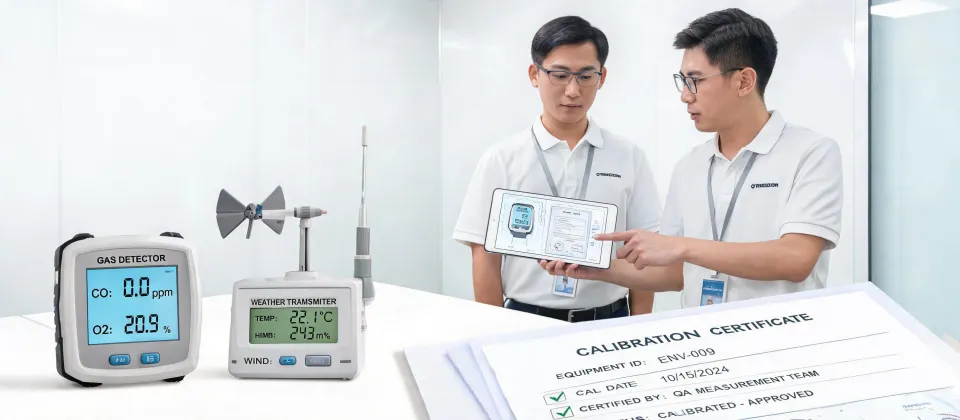
Last April, I stood in our warehouse holding a moisture-damaged component that should have been perfectly dry. The humidity transmitter on the wall read 46% RH. The calibrated reference probe in my hand read 64% RH. An 18-percentage-point gap between what our monitoring system reported and what was actually happening in that room. That gap cost us $28,000 in ruined product. And it started, as these things usually do, with a spreadsheet and a “smart” way to save money.
I’m a quality manager with over twelve years in the job. I review every deliverable that leaves our facility. I check machined parts with bore micrometers, verify surface finishes with calibrated Mitutoyo micrometers, and spec the environmental sensors that keep our products safe from temperature, humidity, and pressure problems. In April, I learned a painful lesson about what happens when you let a unit-price conversation override what you know about measurement instruments.
The Expansion Project That Seemed Simple
It started in January. We were expanding our climate-controlled storage area. The existing facility had been running on six Vaisala HMT humidity and temperature transmitters for years. Those units were rock steady. On every quarterly reference check, they read within tolerance. I trusted them the way I trust a good torque wrench—they did their job and didn’t ask for attention.
For the expansion, we needed eight more transmitters. In my mind, the move was obvious: order eight more of the same Vaisala units. Same model, same behavior, same data flow. At most, this was a two-week delivery conversation.
Then our purchasing manager—let’s call him Dave—came to my desk with a spreadsheet. He’d found a supplier selling similar-looking transmitters at roughly 40% less per unit. “Same specs,” he said, tapping the row where the datasheet showed ±3% RH accuracy, 0 to 100% RH range, and a wide operating temperature window.
Buying eight budget units instead of eight Vaisala units would save about $1,400 on the purchase order. Dave was visibly pleased with that number.
Here’s what I should have said: “Dave, these are not the same instruments. They’re the same bullet points.”
Instead, I said: “Let me ask for their calibration data.”
That’s when things started to feel wrong. The vendor sent “certificates” dated two years earlier—printed sheets with a stamp, not NIST-traceable calibration reports. I asked about response time for technical support. It took them four days to answer one email. Every spreadsheet indicator said “fine, similar specs, good savings.” But my gut said something was off.
I raised my concerns with Dave. He heard “we’ll need to look into this more” as “approve the vendor and I’ll follow up later.” We were using the same words but meaning different things, and we only discovered that later. The order went through in early February.
Two Months of False Security
For the first two months, the budget transmitters looked fine. I reviewed the logs weekly. Readings looked believable. Nothing set off alarms.
Then in April, our final QC line started pulling moisture-failed units from storage. Not a small number. A full batch of sealed components bound for a customer order. The moisture indicator cards were pink when they should have been blue.
First, we suspected the packaging process. We tested it. Packaging was fine. Then we checked the sealing equipment. It tested fine too.
That’s when I pulled our portable humidity reference from the calibration lab and started walking the storage area, sensor by sensor. It was a slow, uncomfortable process. Sensor #7: 7% low. Sensor #3: 11% low. The worst offender—a unit mounted right in the corner we used for our most sensitive material—was 18 percentage points below reality. In that corner, the system reported a safe-looking 45% RH while the actual condition sat at 63% RH. The material in that corner absorbed ambient moisture for days before anybody noticed.
The Call That Revealed Everything
I called the vendor. The exchange went something like this:
“Your sensors read 18% low. That’s not acceptable.”
“What’s the temperature in that area?”
“It cycles. About 15°C in winter, up to 30°C in summer.”
“Ah. Well, our accuracy spec is based on testing at 25°C in a stable lab environment.”
We were using the same words but meaning entirely different things. They said “±3% RH accuracy,” and we heard “accurate in our warehouse.” They meant “accurate at 25°C in a laboratory.” Nothing in the sales process surfaced that difference until after $28,000 of material was compromised.
I went back to their datasheet and found the fine print. It did mention the test conditions. But when the headline spec is bold and the conditions sit in a footnote, you’d be forgiven for reading it as a real-world performance claim.
That was a communication failure on both sides. We didn’t pin down the test conditions behind the spec. They didn’t volunteer that their spec was narrower than it sounded. Both sides walked away from the deal thinking we’d agreed to something we hadn’t.
Counting the Real Cost
Let’s talk money. Here’s what our $1,400 “saving” actually cost:
- Ruined inventory from moisture exposure: $28,000
- Extra inspection labor to re-verify every batch stored in that room: about $6,000
- Expedited replacement of all eight transmitters: about $2,100
- Vendor refund for the failed units: $0. Their datasheet technically covered them
Total: over $36,000 on a purchase difference of $1,400. The cheapest option turned out to be the most expensive one. The saving we celebrated in January was a loan we paid off in April at a terrible interest rate.
Rebuilding With Vaisala
The replacement transmitters were Vaisala HMT120s—the same model we’d trusted in the original facility. They were in stock, the shipping was straightforward, and the documentation was complete from day one. That, by itself, was a relief.
We also changed our routine. Once a quarter, we now take a calibrated reference instrument and compare every installed sensor against it. Two hours of labor per check. It catches drift before it ruins anything. The cost of this protocol is a fraction of what one failed batch cost us.
For our compressed air system, I specified a Vaisala dewpoint transmitter. If moisture gets into air lines, you get rust, blocked valves, and contaminated products. A dewpoint reading tells you whether your dryer is actually doing its job—not just whether the pressure gauge looks healthy.
Our cleanroom also got a proper differential pressure transmitter. When a unit falsely reports pressure differentials, you either think a cleanroom is compliant when it isn’t, or you chase alarms that make the team ignore real problems. The Vaisala DPT series has been stable since installation. In cleanrooms, that consistency is the whole game.
What This Taught Me About Calibration—and Instruments in General
There’s a direct parallel to our metrology lab. We use Mitutoyo micrometers, calipers, and bore micrometers every day. These are excellent tools, but they’re worthless if they’re not calibrated on a regular schedule.
When a new technician asks me how to calibrate a Mitutoyo micrometer, I give them the short version: clean the measuring faces, close them, verify the zero, and check against gauge blocks. But the real lesson is the discipline around it. You need to do this on a schedule, document the results, and quarantine any parts you measured since the last good calibration if you find drift.
If a micrometer reads wrong, your part looks good when it’s bad. Same with a humidity transmitter. If the sensor drifts, your warehouse looks safe when it isn’t. That’s why I treat calibration and verification as non-negotiable, whether we’re talking about a bore micrometer in the machine shop or a hygrometer on the warehouse wall.
Final Thoughts: What I’d Do Differently
If you’re facing a similar buying decision, please learn from my spreadsheet-shaped mistake. Don’t compare invoice prices. Compare what it costs to be wrong. A sensor that protects product, process, or people is not a commodity. It’s insurance.
I’m not going to tell you every budget sensor brand is terrible. What I will tell you is to test your sensors, verify drift, and ask for calibration data. If a vendor can’t give you straight answers about real-world performance, that’s your cue to walk away.
For me, Vaisala has been the vendor that gives straight answers. Our Vaisala weather sensors at the outdoor test site have run 24/7 through rain, snow, and 35-degree heat and stayed stable. Their HMT transmitters in our original facility never gave us a bad reading. We should have trusted that track record instead of chasing a lower line on a purchase order.
Bottom line: the cheapest sensor isn’t the cheapest. It’s just the one with the longest bill. Take it from someone who paid it.

Marcus Feld
Marcus Feld is an electrical test and measurement analyst specializing in multimeters, oscilloscopes, clamp meters, insulation testers, spectrum analyzers, and data loggers. He applies IEC 61010-2-030 and IEC 61010-031 concepts while examining measurement category, bandwidth, true-RMS response, input loading, and stated uncertainty. His work helps maintenance engineers and test teams choose safe instruments with performance suited to the signals and environments they actually measure.