Vaisala WXT536 Price and Weather Station Cost: A Procurement Manager's View
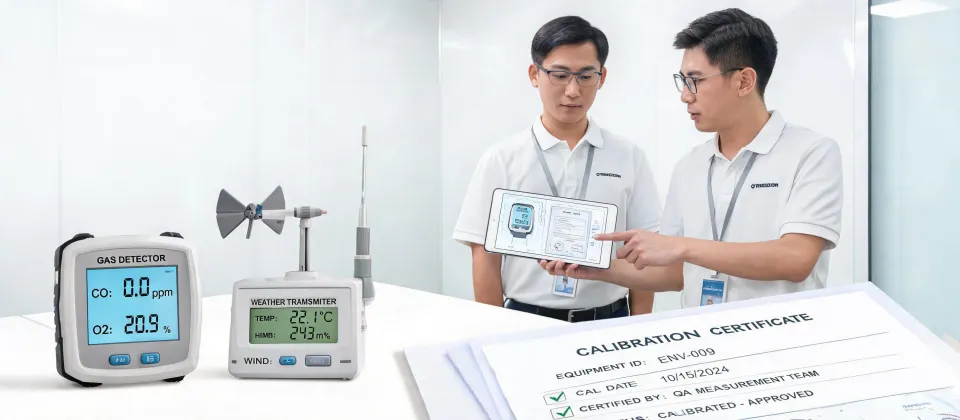
If you're searching for a Vaisala WXT536 price or cost weather station, online listings can range from $3,500 to $6,000 without much context. After reviewing eight quotes over two years, I've learned that the WXT536 price is only part of the weather station cost: the installed and verified cost usually lands 15-35% higher than the sensor quote. If you only budget for the sensor, you'll be light before the station is even logging data.
I'm a procurement manager at a 140-person industrial automation company. I've managed instrumentation budgets for about eight years, including roughly $1.5M in annual sensor and test equipment spend. I've approved 20+ Vaisala orders, tracked every invoice, and built a cost comparison spreadsheet that I use for every weather station project. This is not a sales pitch. I'm sharing the numbers I've actually approved and the costs that most buyers miss.
What the Vaisala WXT536 price actually includes
Vaisala's product literature describes the WXT536 as a multi-parameter weather sensor that measures wind speed, wind gust, precipitation, barometric pressure, temperature, and relative humidity. It replaces several separate instruments, which is why comparing it to a single anemometer doesn't work. The purchase price has to be compared against the cost of multiple sensors, their mounting points, and their maintenance.
Between 2023 and 2025, I got eight quotes for the WXT536 from three distributors. The sensor-only quotes ranged from $3,950 to $4,750. The total landed cost, after adding mounting hardware, radome protection, cabling, heating options, and a factory calibration certificate, ranged from $5,200 to $6,100 per station. Those are planning numbers, not a promise about your quote (pricing varies more than people expect).
The quote variation wasn't random. The cheapest price usually arrived without items I expected to be included. One distributor quoted a lower unit price but charged $850 separately for a mounting kit and cable (which, honestly, felt like more than the cable was worth). The quote with a higher unit price was only $200 more once I added the same accessories. The cost isn't real until the station can be mounted, wired, and configured.
The WXT536 cost mistake I see most often
Most buyers focus on the WXT536 price and miss the costs that show up after the PO. I'm talking about the data logger channel, the enclosure, the power supply, mounting mast, labor, calibration, and the admin time spent chasing different vendors. Those can add 25% to 35% to the total.
When I audited our 2024 spending, I found that 18% of our project costs appeared after the original sensor quote. That is not because the suppliers hid fees; it's because our own procurement process didn't include installation labor in the first pass. Now my standard request is a line-item quote for every accessory and service. It makes comparison harder, but it makes the final cost more honest.
Vaisala CO2 sensors: price and total cost
Vaisala CO2 sensor pricing depends on which product family you need. I've approved Vaisala CO2 sensors from about $400 to $1,600 per measurement point, depending on the output, range, enclosure, and whether I bought extra calibration documentation. The most common unit I buy is the GMP252 probe. In late 2024, a GMP252 was about $550 in quantity one. Don't hold me to that exact price; I'm giving you a budget range, not a quote.
A cheaper CO2 sensor is fine for a room where a rough trend is good enough. For a process where drift causes energy waste or product rework, the Vaisala sensor usually pays for itself through longer calibration intervals and predictable readings. That's a cost decision, not a brand loyalty decision.
One tool I keep on every sensor install: 301D AC/DC clamp meter
A 301D AC/DC clamp meter isn't a Vaisala product, but I still put it into install budgets. Vaisala transmitters often output a 4-20 mA current loop. If a technician only looks at the reading on a display and never checks the loop current, a wiring issue can look like a sensor failure. We once had a $1,200 replacement conversation that ended up being a loose terminal connection. A DC-capable clamp meter caught it in five minutes.
If you're buying a Vaisala weather station or CO2 sensor, put a clamp meter in the same purchase order. It's not the expensive part, and it saves a lot of wasted troubleshooting time.
How to use a Mettler Toledo pH meter (lab version)
A procurement person writing about pH meters may look strange, but I approve the POs for our lab, and I've learned enough to ask the right questions. The short answer for routine use is:
- Calibrate with fresh buffers, typically pH 4.01, 7.00, and 10.01 for a broad range.
- Rinse the electrode with deionized water, not tap water.
- Don't wipe the electrode. Blot it gently or let it drip.
- Immerse the electrode in the buffer or sample, stir once gently, and wait for the reading to stabilize.
- Store the electrode in storage solution, not in water.
I'm not a chemist, so this is not a full SOP. If your pH measurements affect regulatory decisions, follow your own validated procedure and the Mettler Toledo instruction manual. The same logic applies to a pipette aid: accurate lab work needs repeatable dispensing, and a cheap pipette aid can cause rework that costs far more than the price difference.
Boundary conditions: when I wouldn't push for Vaisala
I don't think every project needs a Vaisala weather station or CO2 sensor. For a temporary construction site with a six-week monitoring period, a cheaper all-in-one unit may be the right call. If your application tolerates drift and you can recalibrate often, you can spend less and get acceptable results. If you only need a rough CO2 trend, an expensive sensor is overkill.
These numbers come from my sample: one company, eight WXT536 quotes, a handful of CO2 sensor orders, and the way I calculate total cost. If you're buying 50 stations, or negotiating through a systems integrator, your pricing will be different. The right price is the one you can defend when the station fails at 2 AM and the replacement cost, downtime, and recalibration cost are included.

Marcus Feld
Marcus Feld is an electrical test and measurement analyst specializing in multimeters, oscilloscopes, clamp meters, insulation testers, spectrum analyzers, and data loggers. He applies IEC 61010-2-030 and IEC 61010-031 concepts while examining measurement category, bandwidth, true-RMS response, input loading, and stated uncertainty. His work helps maintenance engineers and test teams choose safe instruments with performance suited to the signals and environments they actually measure.