Need a Sensus Meter by Friday? Call the Dealer, Not the Stock Page
Call the dealer. Ignore the stock page.
If you need a Sensus water meter, a Sensus flow meter, or a Flir thermal imaging camera TI125 running before the end of the week, price is not the deciding factor. It's whether the dealer can read you the serial number over the phone before you pay.
That sounds like a small detail. On a rush order, it's the whole thing. I've watched dealers with an "in stock" banner on their homepage miss a Tuesday install. I've also watched a dealer whose site said "2–3 weeks" pull the exact unit off a back shelf because someone bothered to call.
The stock page is a marketing asset. The serial number is a fact. Learn to tell them apart and most of your emergency procurement problems disappear.
Why you should take this from me
I coordinate emergency procurement at an industrial maintenance company. I've handled 200+ rush orders in four years, including same-day turnarounds for water utilities and manufacturing plants.
In March 2024, a plant's flow readings started drifting 36 hours before a regulatory audit. Downtime was costing them about $12,000 a day. We needed a flow meter, not an "equivalent model." We got the unit because we called three dealers and asked each one to physically verify the stock before quoting—not because we found the lowest price.
Last quarter alone, we processed 47 rush orders with 95% on-time delivery. That number sounds fine until you remember the other 5%. In 2023 we lost a $28,000 maintenance contract because we tried to save $400 on standard lead time instead of paying for expedited freight. The equipment arrived two days late, the client's compliance deadline didn't move, and neither did their decision to replace us. That's when we implemented our "72-hour buffer for anything tied to a compliance date" policy. It's written into the procurement workflow now, not just talked about.
What actually slows down a rush order
1. The dealer isn't authorized—and doesn't say so
From the outside, every dealer looks the same: a warehouse, a website, a quote. The reality is that authorized Sensus water meter dealers can hand you factory calibration and a full warranty, while gray-market resellers are pulling from secondary inventory and hoping you don't ask questions.
The test is simple. Ask directly whether they're an authorized channel, then call the manufacturer and confirm. I've seen a warranty claim on a Sensus meter get denied because the dealer wasn't on the authorized list—and the customer had no idea until the unit failed. Whatever they saved on the invoice, they lost at the claims desk.
Don't treat "water meter" as one product either. Sensus models span generations, and an older unit won't install or communicate the same way as a current one. A dealer having an SM flow meter on hand doesn't mean it matches the communication protocol already running at your site. Ask for the model number, the firmware revision, and the datasheet—in writing.
2. "Same spec" isn't the same thing
I learned this the expensive way in 2022. I sourced a replacement flow meter for a client on a tight deadline. The spec sheet matched: range, accuracy, interface, all of it. We installed it, and the readings were fine—until we tried to connect it to their existing data acquisition system. Different firmware revision. Three days of troubleshooting and a second unit later, we were back where we started, minus the freight and the labor.
Here's what that taught me: a spec sheet tells you what a device can measure. It doesn't tell you whether it will drop into your system without a fight. On an urgent order, confirm three things before you pay—range and accuracy, interface and protocol, and firmware version. Miss one, and you've bought an expensive paperweight.
3. Accessories are the silent delay
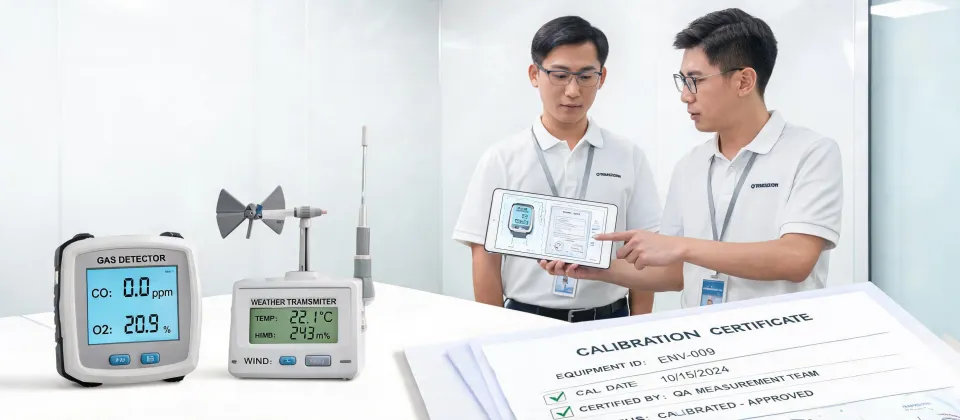
With something like a thermal imaging camera TI125, the body being in stock doesn't mean the unit is usable. Battery, charger, SD card, calibration certificate, carry case—any one of those missing and you're waiting. I've had a camera arrive on time with the calibration certificate trailing a week behind, and the compliance team refused to accept readings from it until the paperwork caught up. Nobody plans for that. Everybody should.
On the multimeter side, the Klein vs Fluke debate comes up constantly in our shop. Honestly? Both lines meet the CAT safety ratings and basic accuracy most field teams need. The real differences are calibration intervals, service response, and what your technicians are already trained on. In a rush, the question isn't which brand is better—it's whether the meter you're buying is rated for the environment it's going into and whether its calibration is current. A meter with the wrong CAT rating is far more dangerous than a meter that cost $40 more than it needed to.
What "value" actually means on a rush order
My view is that rush-order costs have to be read as a total, not a unit price. A flow meter that costs $150 more but lands two days earlier can save many times that in downtime. Flip it around: a battery pack that saves you $80 but arrives three days late, with the line sitting idle waiting for it, makes that $80 the most expensive $80 you'll spend all quarter.
Do the arithmetic. Downtime per day, labor waiting on standby, contractual penalties, re-shipping costs, rework labor—add those up and they usually dwarf the price difference between two instruments. I've walked into that trap more than once, and so has almost everyone I know in this job.
One counterintuitive detail worth knowing: big-marketplace expedited shipping is sometimes slower than going straight to the dealer. Your order gets routed to the same distributor anyway, with an extra handoff in the middle. When the clock is genuinely short, calling a dealer who physically has the unit in their building is usually the faster path.
When this advice doesn't apply
If you've got two or three weeks before the deadline, skip all of this. Order through standard channels, take the normal lead time, and save the premium. Rush pricing only makes sense when time is genuinely worth more than money—and sometimes it isn't.
Same goes for low-cost consumables. If you're buying a few dozen dollars' worth of accessories, a retail channel with expedited shipping can beat a distributor conversation on both cost and speed. Don't pay professional-channel prices just to feel like you're doing it properly.
One last thing on specifications: under FTC advertising rules (ftc.gov/business-guidance/advertising-marketing), performance claims have to be truthful and substantiated. So when a dealer tells you a model "fully meets your requirements," ask for the datasheet and the calibration certificate instead of taking the verbal assurance. That's not distrust—it's just how you protect your own deadline.

Sofia Lindberg
Sofia Lindberg is a thermal and environmental measurement analyst covering thermal imaging cameras, infrared thermometers, hygrometers, moisture meters, weather stations, and air quality meters. She uses ISO 18434-1 thermography principles and evaluates emissivity control, thermal sensitivity, spatial resolution, field of view, response time, and sensor drift. She guides reliability, building-diagnostics, and EHS teams in selecting instruments and interpreting readings without overstating what a single measurement can prove.