Why Your 'Cheap' Temperature Transmitter Is Costing You More Than Vaisala
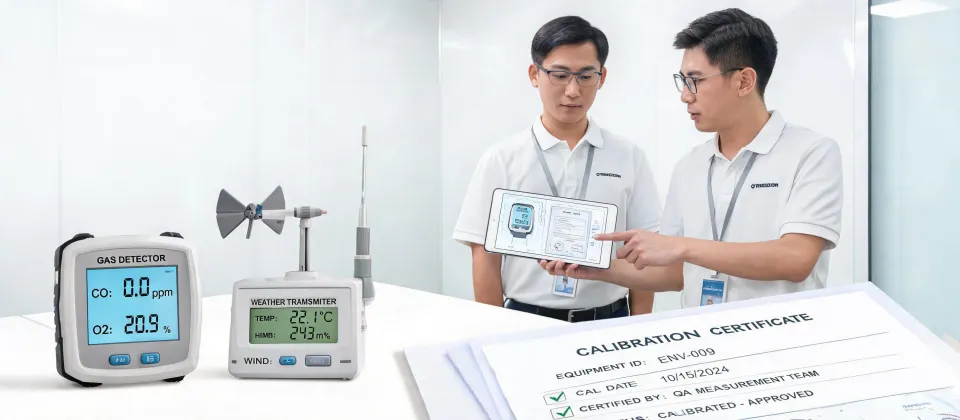
I've been managing procurement for a mid-sized contract manufacturing company for about six years now. Our annual spend on environmental monitoring equipment—temperature transmitters, data loggers, humidity sensors, and the like—hovers around $180,000. It's not the biggest line item on the P&L, but it's one of the most critical. Get this wrong, and you're looking at product spoilage, regulatory non-compliance, or worse, a full batch recall. I've seen it happen.
Early on, I made a fairly simple assumption: this is basically a commodity purchase. You buy a sensor, it measures temperature. The cheaper one does the same job, right? That assumption cost us about $12,000 in rework and lost product in my first year. Not the unit price. The hidden costs.
What I'm about to share isn't a sales pitch for Vaisala. It's a breakdown of a mistake I see procurement teams make all the time, especially when they're starting out or managing small budgets. It's the mistake of optimizing for the wrong number.
The Surface Problem: A Budget That Keeps Shrinking
Here's how it usually starts. A production manager or a quality engineer comes to me with a request: a new temperature and humidity transmitter for a stability chamber in the lab. They need something reliable. I check the budget. For this quarter, I've got maybe $2,200 left for instrumentation. The Vaisala HMP series transmitter on their list? Priced around $1,800.
Then I find a comparable-looking unit from another brand. Specs on paper are almost identical: same measurement range, similar accuracy, same output. The price? $1,100. Great, I think. I'll order two and stay under budget. I'm saving $700 per unit.
I've seen this exact chain of thought in every procurement team I've worked with. It's natural. The saving is immediate and visible. The cost of that saving is not. That's the surface problem: unit price is a terrible proxy for total cost in this industry.
The Deeper Reason: Calibration Drift and the 'Good Enough' Trap
Six years ago, I would have stopped at the surface problem. Today, I know better. The deeper reason cheap sensors cost more is something you won't see on any spec sheet: long-term stability and calibration drift performance.
Every sensor drifts over time. That's physics. But how fast it drifts, and how predictably, is a function of design, materials, and manufacturing quality. The premium you pay for Vaisala—which is usually 30-60% higher than a no-name alternative—isn't for accuracy at the point of sale. It's for accuracy 18 months later.
It's tempting to think that if two sensors meet the same ISO standard at the time of calibration, they're equivalent. But 'meeting spec' on day one is different from 'staying within spec' after a year of operation. The budget sensor I bought six years ago? Its drift was so erratic that we had to recalibrate it every 6 months instead of the standard 12-24 months. Each recalibration cost $150, plus five days of downtime for the chamber.
Over three years, that $1,100 sensor cost us:
- $900 in extra recalibrations (6 recalibrations at $150 each)
- $0 in the product loss category (we caught the drift early because our engineer was diligent)
- But hold on—I'm not 100% sure the product loss was zero. That was my estimate afterward. We might have had a batch that was borderline. Take that with a grain of salt.
Total identifiable extra cost: $900. The Vaisala unit? It held calibration for 24 months reliably. Over the same three years: 1 recalibration, maybe $150. Total cost: $1,950 vs $2,450 for the 'cheap' option. The $1,800 unit saved money. I didn't see that coming.
The 'always compare unit prices' advice ignores the cost of downtime, recalibration labor, and the value of measurement certainty.
The Real Cost of Getting It Wrong
Here's where it gets uncomfortable. The last story had a happy-ish ending—no product lost. But that's partly luck. When I audited our 2023 spending, I found something I'd rather not admit publicly: about 11% of our environmental sensor replacements were emergency purchases. Something failed, the chamber went out of spec, and we needed a replacement yesterday. Those rush orders? They cost 30-50% more than planned purchases.
Now, this was true a few years ago when supply chains were tighter. Today, lead times have stabilized somewhat, but the principle holds. The 'cheap' sensor that fails unpredictably doesn't just cost you the replacement. It costs you the expedite fee, the engineer's overtime to re-qualify the chamber, and the potential cost of discarding product manufactured during the out-of-spec period. That last part is a nightmare to quantify, but it's real.
When I started in this role, I thought I was being smart with money by avoiding 'brand premiums.' I felt a kind of moral superiority, like I was cutting through the marketing hype. Here's the thing: most of those hidden costs are avoidable if you ask the right questions upfront. But you have to know what questions to ask. That's experience talking, not a sales pitch.
The Solution: A Smarter Way to Buy for Small Budgets
So what do I do now? I haven't abandoned my duty to manage costs. But I've adjusted my framework.
- Start with a pilot. I know Vaisala works. But if you're skeptical of the premium, start with one unit. Put it in a critical application. Track its drift. Compare it against your other sensors. When I was starting out, the vendors who treated my $2,000 orders seriously are the ones I still use for $20,000 orders. Small doesn't mean unimportant—it means potential.
- Talk to the application team, not just the sales rep. I've found that Vaisala's technical support actually answers detailed questions about drift rates and recalibration intervals. The budget vendors? Their support reading the spec sheet back to me. That alone helps identify who has engineering depth.
- Factor in the 'hassle cost.' For our quarterly orders of dewpoint transmitters and data loggers, I now budget a 20% 'risk premium' on non-premium brands. It's not scientific. Roughly speaking, it's been a decent heuristic. If the premium brand is within that premium, I default to the premium.
Look, I'm not saying Vaisala is the only game in town. I've used Campbell Scientific transmitters for outdoor weather stations with good results. But for indoor, controlled environment monitoring—pharma storage, test chambers, cleanrooms—the reliability curve strongly favors the established players. The cost per year of reliable service is what matters. Period.
I built a simple total cost calculator after getting burned on hidden fees twice. Now, any purchase over $500 goes through it. Line item: purchase price. Line item: expected recalibrations. Line item: failure risk (based on my experience). It's not perfect, but it's better than guessing.
Next time you're looking at a Vaisala data logger or a dewpoint transmitter for a tight budget, don't just look at the invoice. Look at the three-year cost. That's where the real bargain lives.

Marcus Feld
Marcus Feld is an electrical test and measurement analyst specializing in multimeters, oscilloscopes, clamp meters, insulation testers, spectrum analyzers, and data loggers. He applies IEC 61010-2-030 and IEC 61010-031 concepts while examining measurement category, bandwidth, true-RMS response, input loading, and stated uncertainty. His work helps maintenance engineers and test teams choose safe instruments with performance suited to the signals and environments they actually measure.