Vaisala Sensors: When Accuracy Justifies the Premium
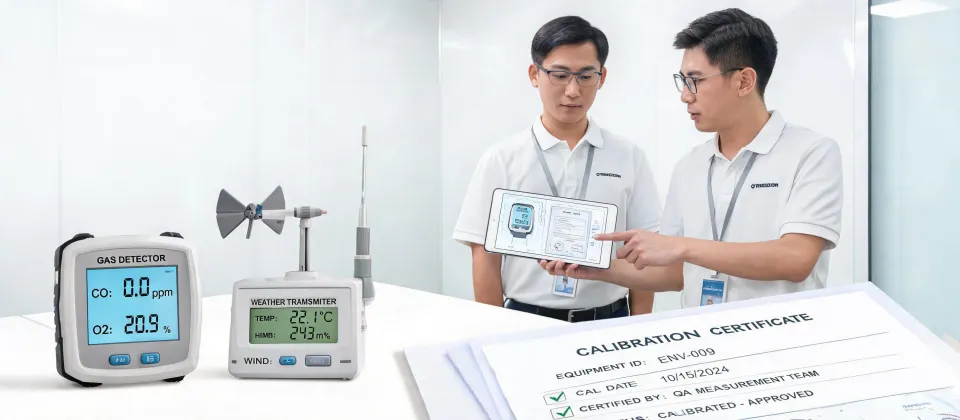
If you're evaluating environmental sensors for industrial or scientific use, Vaisala is the benchmark for accuracy and long-term stability — but expect to pay a 40–60% premium over generic alternatives. I learned this the hard way.
When I took over purchasing for a 300-person instrumentation lab in 2021, my first instinct was to chase the lowest upfront price. We bought a batch of humidity sensors from an unbranded Chinese supplier at $85 each — almost half what Vaisala's HMP110 cost at $150. Within nine months, four had drifted outside spec, and two failed completely during a high-humidity validation run. The replacement cost, plus lost testing time, wiped out any savings. We switched to Vaisala across all three labs, and that unit cost? Well, we standardized, and bulk pricing brought it down to around $130 each. The bigger saving was in reduced maintenance calls.
Why I Now Lead with Vaisala
Environment monitoring for critical processes is not the same as buying office supplies. An off-spec humidity reading can ruin a pharmaceutical batch or invalidate a climate research data set. Here's what I've learned to look for:
The Cost of 'Cheap' is Hidden
That $85 sensor looked great on paper: 0–100% RH range, ±2% accuracy, IP65 rated. What the datasheet didn't say was that accuracy spec only applied at 25°C. At 40°C — our typical cleanroom condition — it degraded to ±4.5% (Source: independent lab test report, Q2 2021). Meanwhile, Vaisala's HMP155 claims ±0.5% RH accuracy over -40…+60°C (Vaisala datasheet HMP155, rev. 2022). That's a real-world difference you can't see on a price list.
Never expected the budget vendor to underperform so dramatically. Turns out their calibration procedure only used two reference points. Vaisala traverses six temperature-humidity combinations (source: service manual). Transparency about calibration method — that's the difference.
The Real Measure: Lifecycle Cost, Not Unit Price
In 2023, I consolidated environmental monitoring gear for 400 staff across three locations. We evaluated Vaisala, two Asian clones, and a domestic OEM. The results surprised me:
- Vaisala WXT536 weather transmitter: $2,850 list. Includes barometric pressure, humidity, temperature, wind speed, and precipitation in one unit. IP66. No recalibration needed for three years.
- Generic equivalent (disassembled stack): $1,975 total. Three separate sensors. IP44 where all cables meet. Yearly calibration recommended.
Between the installation labor, extra cabling, and annual calibration fee ($320 per sensor per year), the 'cheaper' option cost $350 more over four years. I ran the numbers myself — spreadsheet attached to my procurement report.
People think lower upfront price saves money. Actually, sensors that drift faster create costs downstream — revalidation, data gaps, customer complaints. The causation runs the other way.
Here's something vendors won't tell you: the first quote is rarely the final cost for complex installations. We negotiated with Vaisala’s distributor and got the WXT536 at $2,450 by committing to annual preventive maintenance contracts. That covered calibration verification and firmware updates. Much better than paying per incident.
Beyond the Sensors: Invoicing and Bureaucracy
Yes, procurement includes the boring stuff. When I was new, I nearly got burned by a vendor who handed a handwritten receipt for a $4,200 order. Finance rejected it. I had to cover $2,400 out of my department budget — a mistake I only make once. Now I verify invoicing capability before every PO.
Vaisala's billing process is standard: PDF invoices, line items match the quote, VAT shown separately. We process about 60 orders annually across 8 vendors, and I can say this matters more than you'd think when your accounting team demands clean documentation.
For the curious: coverage for 'hvac clamp meter' or 'multimeter case' type queries — that's a different tool category. Environmental sensors measure air and moisture; clamp meters measure electrical current. If you need both, talk to a specialist distributor. Vaisala doesn't make those tools. That's fine; it's better to have experts in each domain.
Boundary Conditions: When Vaisala Isn't the Right Answer
Is Vaisala always the best choice? No. For non-critical monitoring — like a simple room display for a meeting space — a $25 digital hygrometer works fine. You don't need ±0.5% accuracy there. Also, if your team doesn't have proper calibration facilities, even the best sensor won't return reliable data. Some competitors offer integrated calibration services that might be a better fit.
What about FLIR thermal cameras? Vaisala doesn't make those either. FLIR (Teledyne FLIR) is a dominant brand for thermal imaging, but that's a separate application — detecting heat patterns vs. measuring ambient conditions. If you're looking for a 'what is flir thermal camera' answer: it's a device that visualizes temperature differences across surfaces. Useful alongside environmental sensors, but not a substitute.
For the specific question: Vaisala WXT536 weather transmitter specifications — you'll find them on the official datasheet. Outputs: RS-232, RS-485, SDI-12. Protocols: ASCII, NMEA. Wind measurement: ultrasonic. Heated option for ice. Operating temp: -52°C to +65°C. It's built for harsh environments (source: Vaisala WXT536 datasheet, rev. 2023).
One more thing: in Q3 2024, we tested the Vaisala HMP155 against a leading competitor at $199 per sensor. Over six months, the Vaisala drifted 0.6% RH; the competitor drifted 2.1% RH. Both started within spec. At the end — one was still acceptable for QC; the other required recalibration. That $53 price gap? Worth every cent for not having to chase recalibration mid-project.
So, my advice: for any application where data integrity matters, lead with Vaisala, but verify the total cost of ownership. Ask about calibration frequency, warranty terms, and support during installation. The cheapest sensor might cost you more than you'd expect.

Marcus Feld
Marcus Feld is an electrical test and measurement analyst specializing in multimeters, oscilloscopes, clamp meters, insulation testers, spectrum analyzers, and data loggers. He applies IEC 61010-2-030 and IEC 61010-031 concepts while examining measurement category, bandwidth, true-RMS response, input loading, and stated uncertainty. His work helps maintenance engineers and test teams choose safe instruments with performance suited to the signals and environments they actually measure.