Vaisala Sensor FAQ: Answers From Someone Who Handles the Rush Orders
-
Which Vaisala sensor should I choose when the deadline is tight?
-
What makes Vaisala HUMICAP sensor technology different?
-
Are Vaisala CO2 sensors the same as temperature sensors?
-
What is the deal with rotational speed sensors and Vaisala?
-
Topdon vs FLIR thermal camera: which one is better, and do I need Vaisala?
-
Is it worth paying for expedited delivery on Vaisala sensors?
-
How do I verify a Vaisala sensor when there's no time for calibration?
-
What should I avoid when buying Vaisala sensors on a rush order?
In my role coordinating sensor orders for B2B clients, I've handled 200+ rush orders over the years. Maybe 180, I'd have to check the system. When a customer calls with a failed measurement loop and a project deadline looming, the questions are always the same: How fast? How accurate? How much?
This FAQ covers the Vaisala sensor questions that keep coming up when time is short. No fluff, just what I've learned from expedited deliveries and last-minute swaps.
Quick list:
- Which Vaisala temperature or humidity sensor should I pick in a hurry?
- Is paying extra for faster delivery worth it?
- What's the real difference between a CO2 sensor and a temperature sensor?
- What do thermal cameras and Vaisala sensors have in common?
- How do I verify a sensor when there's no time for a full lab calibration?
Which Vaisala sensor should I choose when the deadline is tight?
If I need a humidity or temperature sensor quickly, I start with the Vaisala HMP series. The HMP60 and HMP110 have shown up in more of my rush orders than any other model. The HMP60 is a compact transmitter with just the basics. The HMP110 has a probe-style design that's easier to mount into an existing duct or chamber. Both use Vaisala's HUMICAP sensor technology, which is the main technology I care about for general HVAC and industrial monitoring.
But here's the catch: choose the standard configuration. We once expedited a custom sensor with a special filter and a nonstandard output range. The vendor, being flexible as they always are, delivered it in minimal time. But our team spent two days trying to make the nonstandard output match our PLC. What I mean is, the delay wasn't in shipping, it was in integration. In a frantic week, a standard model that your team has seen before beats a custom model with a better spec sheet.
What makes Vaisala HUMICAP sensor technology different?
HUMICAP is Vaisala's capacitive polymer film sensor for relative humidity measurement. It's designed for long-term stability in environments where many humidity sensors start drifting. According to Vaisala's published product documentation, HUMICAP sensors are compatible with their field calibration checks, which is useful if you're maintaining a large installed base.
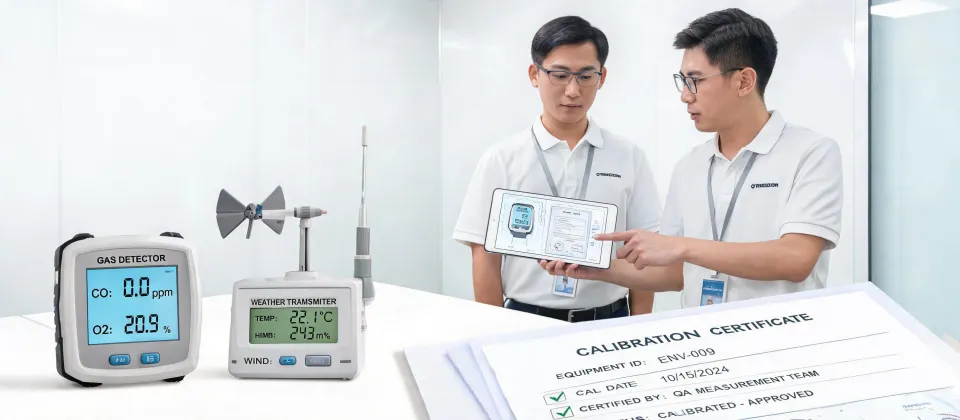
Still, I would not buy a Vaisala sensor on brand name alone. The calibration certificate matters more. If a distributor can't provide a current, traceable calibration certificate, the sensor is just expensive metal. The HUMICAP name is a selling point, but your QA department will not accept 'brand trust' as proof of accuracy. They want papers. So do a quick scan of the datasheet, get the certificate, and verify the as-left calibration values before the sensor goes into your process.
Are Vaisala CO2 sensors the same as temperature sensors?
No. A Vaisala CO2 sensor such as the GMP252 measures carbon dioxide concentration in ppm for ventilation control or air quality research. Temperature sensors measure thermal energy for process control. They solve different problems. Some CO2 sensors include temperature compensation built in, but that doesn't make them a replacement for a dedicated temperature sensor.
In a greenhouse or cleanroom, you might need both. The CO2 sensor controls air exchange; the temperature sensor controls heating or cooling. When you're expediting an order, it's easy to rush the approval process and realize after delivery that you bought the wrong measurement module. Ask the end user to confirm the measured parameter before you place the PO. It sounds obvious, but I've made that mistake, and it's a painful one.
What is the deal with rotational speed sensors and Vaisala?
Straight answer: Vaisala doesn't list a rotational speed sensor in its standard environmental monitoring catalog. The brand's focus is humidity, temperature, pressure, wind, CO2, and similar environmental parameters. If you're measuring RPM on a motor shaft, you need an optical or magnetic rotational speed sensor from a specialist vendor.
That said, we sometimes buy a rotational speed sensor alongside a Vaisala temperature and humidity transmitter. One example: monitoring a ventilation fan in a coastal facility. The fan's RPM affects airflow, and humidity affects corrosion and icing risk. The two measurements feed into the same maintenance dashboard. The Vaisala sensor isn't a rotational speed sensor, but it's part of the same monitoring picture. Put another way: don't search Vaisala's catalog for RPM sensors. Search for a monitoring strategy that uses a dedicated speed sensor and a separate environmental sensor.
Topdon vs FLIR thermal camera: which one is better, and do I need Vaisala?
Topdon and FLIR make thermal imaging cameras for surface temperature scanning. When people compare Topdon vs FLIR, they're usually looking for an electrical or mechanical inspection tool. Vaisala is not in that business. Vaisala makes contact and environmental sensors for air, humidity, CO2, and weather. The two categories are different.
I've seen facility teams try to use thermal cameras to evaluate indoor air temperature for HVAC control. That's a misuse. A thermal camera measures surface radiation, not air temperature. If you want a room air temperature reading that actually feeds into your BMS, you need a temperature probe in a radiation shield, protected from direct sunlight or hot surfaces. So, if you're asking Topdon vs FLIR, your decision is about thermal imaging. If you're asking how to measure air temperature accurately, stop looking at thermal cameras and call a sensor supplier instead.
Is it worth paying for expedited delivery on Vaisala sensors?
Yes, if you're buying certainty, not just speed. In early 2024, a client needed a humidity transmitter for a coating process that was stalled. Normal delivery was five days. We paid an additional USD 350 for expedited freight. The client's alternative was a $15,000 production standstill, not to mention the knock-on effect on their customer. Even the rush fee seemed expensive at the time. It wasn't.
Now comes the boundary. My experience is based on B2B orders and freight within established supplier networks. If you're a consumer buying one sensor or dealing with international customs and unknown carriers, the math can change. Expedited delivery can still fail if the destination is remote. So don't treat the fee as a guarantee. Treat it as a risk-reduction purchase. Ask what the failure cost is, multiply by the probability of missing the deadline, and then compare that number to the shipping cost.
How do I verify a Vaisala sensor when there's no time for calibration?
Don't skip verification entirely. At minimum, do a quick reference check against a calibrated handheld instrument or a known reference chamber. For humidity, check the sensor at a low point and a high point, not just one point. For temperature, an ice bath at 0°C is a fast sanity check. It will not replace an ISO 17025 lab calibration, but it catches the gross failures that waste a day after installation.
Some Vaisala transmitters can be field checked with a handheld reference standard like the HM70. We use that in a pinch. However, when the sensor is critical to a process, we still ship it to an accredited lab at the next available window. In one case, we didn't have a backup sensor and didn't want to stop the line. Looking back, I should have paid for a spare. The stress of crossing our fingers for two weeks was not worth the $200 we saved.
What should I avoid when buying Vaisala sensors on a rush order?
Avoid custom configurations, unusual output ranges, and anything that needs specialized mounting hardware. These additions can stretch a one-week order into three weeks and create integration surprises. Also avoid sensors that require a special chemical filter for marginal applications unless you have an internal expert who can install and validate it quickly. Need. Feasibility. Risk. Those are the three filters I use before approving an expedited sensor order.
If possible, buy one spare unit. Spare units don't feel urgent until a sensor fails and the project deadline does not move. Then the spare becomes the cheapest insurance you ever skipped. When a rush order arrives, we run a quick visual inspection, check the model number against the purchase order, verify the calibration certificate, and then do a baseline reference check. Only then does it go into the stockroom for delivery to the client. Done.
Prices and delivery times reflect recent market conditions; verify current availability with your distributor.

Marcus Feld
Marcus Feld is an electrical test and measurement analyst specializing in multimeters, oscilloscopes, clamp meters, insulation testers, spectrum analyzers, and data loggers. He applies IEC 61010-2-030 and IEC 61010-031 concepts while examining measurement category, bandwidth, true-RMS response, input loading, and stated uncertainty. His work helps maintenance engineers and test teams choose safe instruments with performance suited to the signals and environments they actually measure.