Why I Paid a Premium for the Vaisala WXT536 (and Why I'd Do It Again)
It was a Tuesday morning in March 2022. I had two hours to place a rush order for a weather station for a field validation study. My boss needed it on-site in three days. The budget was tight. And I was staring at two quotes: one for a Vaisala WXT536 at a price that hurt, and another from a lesser-known brand that was about 30% cheaper and promised same-week delivery.
I chose the cheaper option. It was the wrong call.
The Setup: A Familiar Pressure
For context, I'm a project engineer handling procurement for environmental monitoring at a mid-sized consulting firm. I've made (and documented) maybe a dozen significant procurement mistakes over the years, totaling roughly $14,000 in wasted budget. That March morning, I was about to add another line item to my personal "stupid tax" ledger.
The project was simple enough: we needed a compact weather station to log wind speed, direction, and barometric pressure at a remote solar farm site for two weeks. The WXT536 was the recommended option from our field team because it's an all-in-one unit—no moving parts, ultrasonic wind measurement, built-in pressure sensor. The alternative was a combo of separate sensors from a brand I won't name (uh, because my boss would kill me). It was cheaper and the specs looked similar on paper.
The Mistake: Chasing the Low Price
Like most beginners, I assumed "standard" meant the same thing to every vendor. The cheaper unit's datasheet claimed a pressure accuracy of ±0.5 hPa. The WXT536 claims ±0.3 hPa. I figured, "Close enough. Who's going to notice 0.2 hPa?"
The first red flag came when the unit arrived and the connector wasn't compatible with our logger cable. (Should mention: we'd assumed a standard M12 connector. The cheaper unit used a proprietary plug. That added a 24-hour delay and $45 for an adapter.)
The real problem started on day two of deployment. The pressure readings were drifting. By day three, they were off by nearly 2 hPa compared to our reference barometer. The wind data looked noisy too—gusts that didn't correspond to anything the site meteorologist was seeing.
The Turning Point: A $3,200 Headache
In my first year (2017), I made the classic specification error: ignoring temperature range. This time, I'd ignored something equally basic: the unit's operational envelope for sustained accuracy. The cheaper sensor's fine print said its accuracy spec applied at 25°C. Our field site was hitting 38°C inside the enclosure. (Ugh.)
The mistake affected a $3,200 order. We ended up spending:
- $890 on the cheaper unit (wasted)
- $45 for the adapter (now useless)
- $1,200 for a rush replacement order of the Vaisala WXT536
- $450 for overnight shipping
- Plus a 2-day delay to the project schedule, which cost us in client goodwill
That's $2,585 total for what could have been a single $1,895 purchase from Vaisala's authorized distributors if I'd pushed back on the initial budget pressure. What I mean is the "cheap" option ended up costing 36% more. (Note to self: run this calculation before every rush order.)
The Rescue: Why Vaisala's Store & Support Matter
This is where the Vaisala store experience saved us. When I called their support line at 3:30 PM, I wasn't expecting much—most manufacturers have a 24-hour turnaround just for quotes. The rep on the phone listened, asked a few questions about our deployment (temperature range, expected data logging interval), and confirmed the WXT536 was the right fit. She didn't try to upsell me to the WXT538 or a data logger bundle. She just said, "We can ship one today from our US warehouse if you order within the hour."
We placed the order at 4:12 PM. The unit was delivered at 10:30 AM the next day. (Finally!)
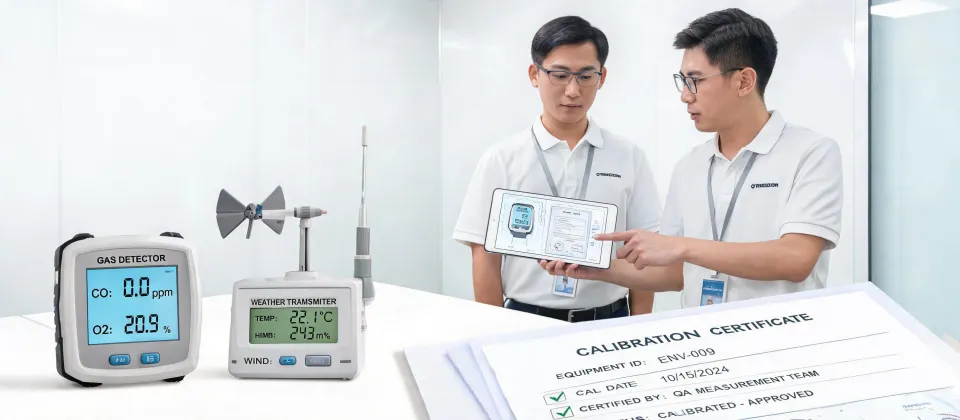
The WXT536 ran flawlessly for the entire two-week study. Pressure readings tracked within 0.1 hPa of our reference. Wind data was clean. The unit came with a calibration certificate traceable to national standards—something the cheaper vendor hadn't provided. (I should add that for regulated projects, that certificate alone can save hours of documentation labor.)
The Lesson: Time Certainty Has a Premium
Looking back, I should have paid the extra $400 for the Vaisala upfront. The alternative was missing a $15,000 project milestone—and I nearly did. In emergency situations, what you're really buying isn't just a sensor; it's the confidence that the thing will work when you plug it in.
I'm not a logistics expert, so I can't speak to carrier optimization. What I can tell you from a procurement perspective is how to evaluate vendor delivery promises. With Vaisala, the price includes:
- Known delivery windows (the store lists stock status)
- Responsive support that can actually answer technical questions
- Calibration documentation that meets audit requirements
After that experience, our team adopted a simple checklist for emergency orders:
- Is the delivery date guaranteed? (Not "estimated.")
- Is the accuracy spec valid at your operating temperature range?
- Do you have a backup plan if the unit arrives damaged or DOA?
- What's the cost of being wrong? (Price difference × probability of failure)
Bottom Line
The Vaisala WXT536 cost us more upfront. But when the pressure was on—literally and figuratively—that premium bought us something the cheaper option couldn't: certainty. If you're sourcing a weather station for a time-critical project and a Vaisala is available from an authorized distributor, just buy it. Your future self will thank you.
As for the used oscilloscopes and Flir thermal cameras I've also sourced for various projects—that's a story for another day. (And yeah, I've made mistakes on those too.)

Marcus Feld
Marcus Feld is an electrical test and measurement analyst specializing in multimeters, oscilloscopes, clamp meters, insulation testers, spectrum analyzers, and data loggers. He applies IEC 61010-2-030 and IEC 61010-031 concepts while examining measurement category, bandwidth, true-RMS response, input loading, and stated uncertainty. His work helps maintenance engineers and test teams choose safe instruments with performance suited to the signals and environments they actually measure.