Emergency Repairs I Could've Prevented: What 50+ Rush Fixes Taught Me About Equipment Maintenance
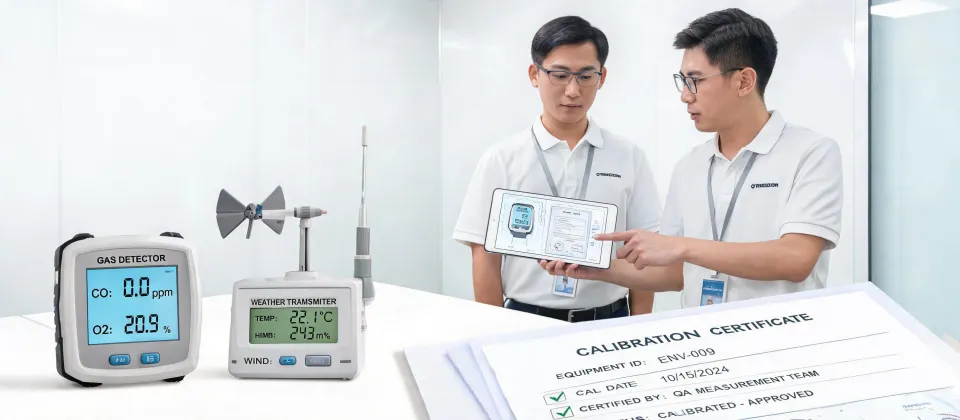
Bottom line: most emergency equipment failures are preventable — and I've got the scars to prove it
After coordinating over 50 rush repairs in the last four years for pharma, industrial and research clients, here's what I know: about 8 out of 10 urgent calls could've been avoided with a better maintenance routine. I'm not talking about expensive overhauls either. I'm talking about basic checks — cleaning, calibration, replacement cycles — that got skipped because someone was too busy or didn't think it mattered.
In my role as an equipment response coordinator, I handle the calls that come in at 4 PM on a Friday. The ones where a sensor is reading garbage, a pipette is delivering inconsistent volumes, or a safety check turned up a reading that doesn't make sense. I've seen the same patterns repeat across different facilities, different industries. So let me walk you through the ones that stick with me — and what they cost.
That Vaisala sensor that failed 36 hours before an audit
March 2024. A client called at 2 PM — they had a FDA audit in 36 hours and their temperature and humidity monitoring system was logging intermittent errors. They'd been ignoring a drift in one Vaisala temp humidity sensor for about three weeks — or rather, they'd noticed it but didn't think it was urgent. The sensor was in a cold storage room holding clinical trial samples. Normal calibration turnaround? Five business days.
We sourced a replacement from the Vaisala store — they had the same model in stock, which saved us — and shipped it overnight. Total cost: about $380 for the sensor plus $85 in expedited shipping. But here's the part that bothers me: the original sensor had been giving subtle warnings for weeks. A simple recalibration — $120, done onsite — would've caught the drift. The $380 + $85 + my overtime could've been avoided.
What I learned: if a sensor reading starts walking, it's not going to fix itself. Five minutes of checking saves five days of scrambling.
The pipette that nearly ruined a batch of results
This one still makes me wince. A biotech lab called us because their ELISA results were all over the place — coefficients of variation above 15%, which is basically unusable data. The team had been troubleshooting for two days. New reagents, new plates, new protocols. Nothing worked. Then someone asked: when was the last time the pipettes were cleaned and calibrated?
Silence.
Turns out, the eight-channel pipette they used for the bulk dispensing had residue buildup in the lower barrel. The seals were sticking intermittently. If you've ever cleaned an Eppendorf pipette, you know it's not complicated — you disassemble, wipe the piston and seals with ethanol, let it dry, reassemble. Maybe 20 minutes per pipette. But nobody had done it in four months. Their standard operating procedure said monthly. Well, we were busy.
The cost of those two days of troubleshooting: roughly $4,600 in lost labor, wasted reagents and delayed results. The cost of cleaning 12 pipettes: maybe 4 hours of a technician's time, tops.
That's when I stopped believing the 'we'll do it next week' excuse. If you use Eppendorf pipettes — or any precision dispensing tool — the cleaning schedule exists for a reason. Skipping it saves you 20 minutes today and costs you two days next month.
The voltage tester and safety sensor that got ignored until inspection day
A manufacturing client had a safety audit coming up — the kind where an external inspector walks through with a checklist. The maintenance lead told me: we tested our safety sensors last week and two of them didn't respond. The voltage testers we use for lockout-tagout are all reading low too. He said this with a shrug, like it was a minor inconvenience.
I get why people think that way. Safety sensors and voltage testers aren't production-critical — they don't stop a line when they fail. But here's the thing: when an inspector flags them, you're not just fixing the sensor. You're documenting the gap, filing a corrective action, possibly re-scheduling the audit. That client ended up rush-ordering replacement safety sensors and two new voltage testers, paying about 30% more than they would've if they'd replaced them on a normal schedule. The audit got pushed by two weeks because the initial findings were rated 'critical'.
The surprise wasn't the cost of the replacements. It was the administrative fallout — the paperwork, the follow-up, the lost production time while the line was idled for re-inspection. Safety equipment is the cheapest insurance you'll ever buy. But only if you treat it like maintenance, not like a fire extinguisher you hope to never use.
What these cases have in common
I've listed three different kinds of equipment — environmental sensors, lab pipettes, safety testers — but the pattern is identical. Someone noticed a warning sign. Someone decided it could wait. And then someone (usually me) got a panicked call at an inconvenient hour.
Here's the checklist I now give every client after a rush fix:
- Set a recurring calendar block for equipment checks — and treat it like a client meeting. 30 minutes every two weeks.
- Know your replacement cycle. If your Vaisala sensor is rated for 2-year calibration stability, mark the month. If your pipette seals need annual replacement, put it on the wall.
- Test your safety gear quarterly. Voltage testers, safety sensors, gas detectors — if they fail when you test them, you want to know on a Tuesday morning, not the day before an inspection.
- Keep one backup in stock. One spare Vaisala temp humidity sensor, one spare pipette, one spare voltage tester. The carrying cost is negligible compared to the rush shipping and downtime.
To be fair, not every emergency can be prevented. Equipment genuinely fails. Lead times sometimes just don't work out. But in my experience, about 80% of the rush calls I've handled had a precursor that was ignored. That's a hard number, and I can't prove it with a published study — it's based on my own log of cases. But I'll take my own data over a guess any day.
When prevention isn't enough — and what to do then
Granted, there are situations where you can't catch everything. A sensor can fail suddenly. A power surge can fry a circuit board. A batch of pipettes can have a manufacturing defect. That's life.
When that happens, the best you can do is shorten the response time. Have a vendor relationship already in place. Know where the Vaisala store is and what they stock. Have a backup supplier for your critical consumables. The goal isn't zero emergencies — it's zero preventable emergencies. The ones that happen anyway are manageable if you've got a system.
So, bottom line: if there's a piece of equipment in your facility that's been giving you that look — the reading that's slightly off, the seal that's sticking, the alarm that blinks and resets — don't wait. Fix it this week. I promise you, the cost of fixing it now is a fraction of what you'll pay to fix it later. I've seen the invoice.
Prices and timelines referenced are based on actual cases from 2023-2024; verify current rates and lead times with your suppliers.

Marcus Feld
Marcus Feld is an electrical test and measurement analyst specializing in multimeters, oscilloscopes, clamp meters, insulation testers, spectrum analyzers, and data loggers. He applies IEC 61010-2-030 and IEC 61010-031 concepts while examining measurement category, bandwidth, true-RMS response, input loading, and stated uncertainty. His work helps maintenance engineers and test teams choose safe instruments with performance suited to the signals and environments they actually measure.