Buying Measurement Equipment? Use These Four Scenarios to Calculate Real Costs
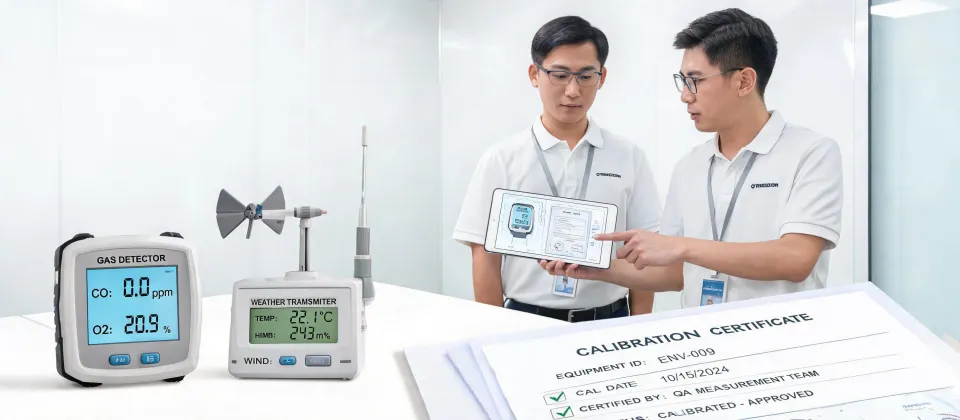
If you're buying measurement equipment—whether it's a precision pressure sensor, an electronic pipette, or even a caliper case—you've probably noticed that prices swing wildly between vendors. There's no single right answer. The best purchase depends on how you'll use the device, how often it needs calibration, and what breakdowns actually cost you in lost time.
Over the past six years, I've managed a procurement budget of about $180,000 for our testing lab and production floor. I've compared quotes from dozens of suppliers and learned where hidden fees tend to hide. So let's walk through the scenarios I see most often.
The Four Buying Scenarios
Most equipment purchases fall into one of four buckets. Each has its own cost logic, and mixing them up is where overspending starts.
Scenario A: You Need Accurate Pressure Monitoring
Let's say you're evaluating a Vaisala pressure sensor. From the outside, the price gap between Vaisala and a generic sensor looks like pure margin. The reality is that long-term stability drives the total cost, and cheap sensors often drift faster.
In 2023, I bought a lower-priced transmitter because the initial spec looked almost identical. Within six months, it was reading 0.8% off. We had to recalibrate every quarter, which meant downtime and labor that ate up the money we'd saved. Meanwhile, the Vaisala sensors in our other line had gone 18 months without needing adjustment.
What most people don't realize is that published accuracy specs are measured under controlled conditions. On a humid factory floor, real-world drift is often larger. That's why I now ask vendors two questions:
- What's the expected drift after 12 months in this temperature and humidity range?
- What does the calibration service cost per cycle?
If the cheaper option needs twice as many calibrations, it's not actually cheaper.
Scenario B: You Need an Electronic Pipette
For lab work, I've bought electronic pipettes where the upfront price looked great. Then came the catch: proprietary tips, special charging cables, and a calibration interval that forced us to buy a backup unit.
The hidden cost in a pipette is consumables and service. Before you compare sticker prices, ask about tip compatibility and calibration turnaround. A transparent vendor will tell you cost per thousand transfers. One supplier we used charged $42 per tip rack, and the pipette only accepted that brand. Over two years, the tips cost more than twice the pipette.
There's something satisfying about finally standardizing on a model that uses shared tips with our other lab equipment. It sounds small, but it cut our consumable budget by 17%.
Scenario C: You Need a Caliper Case
A caliper case seems like a no-brainer. But I've seen $10 cases that look padded and still let in moisture. A machinist's caliper can corrode within weeks if the case traps humidity.
People assume a case is just a box; what they don't see is the internal compartment design and whether the seal actually closes. For a $300 caliper, a $25 case with a proper O-ring and desiccant slot is worth it. You can spend another $75 on a calibration check if it gets damaged—so the cheap case can cost you more than a quality one.
Scenario D: You Need to Program a Rice Lake Weighing System
This one caught me off guard. We bought a Rice Lake scale indicator for a production line, and I assumed our integrator would handle the setup. The hardware was solid, but nobody told me that programming the indicator is its own little project.
Rice Lake indicators are configured through a proprietary menu system, and some advanced features use a scripting language called iRite. If you're comfortable with technical manuals, you can handle it—but if not, budget for training or a service call. I still kick myself for not asking about programming support during the quote phase. That omission turned into an unexpected $1,200 invoice.
If your team doesn't have PLC or scripting experience, get the integrator to include configuration in the quote. If you do have that expertise, the learning curve is manageable. But either way, the cost is real, and it should be part of your comparison.
How to Figure Out Which Scenario You're In
Start by looking at what fails first. Pressure sensors fail through drift. Pipettes fail through contamination or calibration loss. Calipers fail through physical damage. Scale systems fail through configuration mistakes. Those different failure modes lead to different budget priorities.
Then ask this: what will a failure really cost you? If an inaccurate sensor can ruin a batch, you need reliability over initial price. If a pipette tip is your main ongoing expense, consumables drive the decision. If your caliper sits on a bench all day, a basic case is fine. If it gets tossed in a toolbox, invest in protection.
Also, write down your total cost of ownership before comparing quotes. Include purchase price, calibration, consumables, and the value of your own time.
Bottom Line
The cheapest quote almost never is. I've learned to ask what's not included before asking for the price. Per FTC guidelines, vendors need to substantiate their claims—so if a supplier won't put a spec in writing, that's a red flag.
When you get a quote, compare it against the full scenario, not just the line item. It's the only way to make sure the price you see is the price you'll actually pay.

Marcus Feld
Marcus Feld is an electrical test and measurement analyst specializing in multimeters, oscilloscopes, clamp meters, insulation testers, spectrum analyzers, and data loggers. He applies IEC 61010-2-030 and IEC 61010-031 concepts while examining measurement category, bandwidth, true-RMS response, input loading, and stated uncertainty. His work helps maintenance engineers and test teams choose safe instruments with performance suited to the signals and environments they actually measure.