Why Your Outdoor Temperature and Humidity Readings Keep Lying to You – and What to Do About It
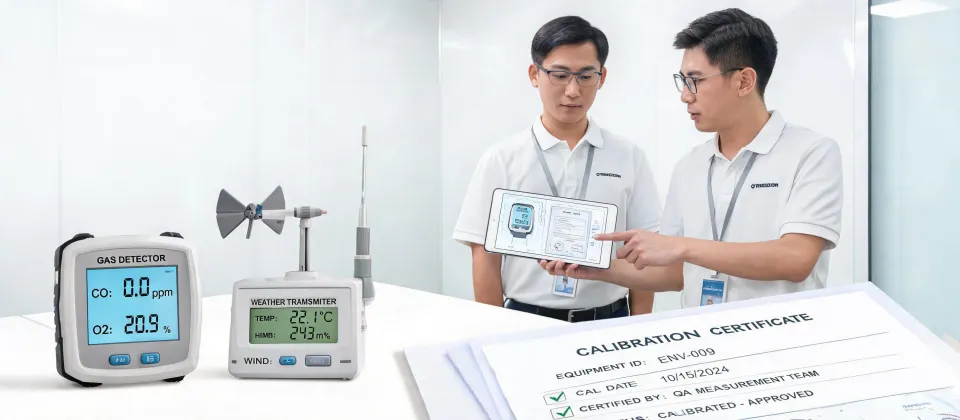
Last spring, I got a call at 4 PM on a Friday. A pharmaceutical warehouse had lost temperature control overnight, and their cheap outdoor temp/humidity sensor was showing a perfect 22°C. Reality? It was 31°C. The batch of raw materials – worth about $40,000 – was already compromised. By the time they verified with a handheld backup, it was too late.
This isn’t a rare horror story. In my role coordinating environmental monitoring for industrial and pharma clients, I’ve seen this exact pattern at least a dozen times. The surface problem is always the same: “My sensor data doesn’t match the real conditions.” But the root cause runs deeper than most people suspect.
The Surface Problem: Unreliable Outdoor Monitoring
You’ve probably noticed it too. One day your Vaisala outdoor temperature and humidity sensor reads one thing, and the next day it’s off by 2°C. You chalk it up to “normal variance” and move on. But the real issue isn’t a fluke – it’s a slow, progressive drift that builds up over months.
Here’s the thing: many outdoor sensors, especially budget ones, are designed for indoor use. They can’t handle direct sunlight, condensation, or rapid temperature swings. They’re also rarely calibrated after installation. Over a year, a cheap CO2 sensor Vaisala competitor (let’s not name names) can drift by ±5% or more. For critical applications like pharma storage or greenhouse control, that’s a disaster waiting to happen.
The Deep Cause: What Cheap Sensors Hide
Drift Isn’t Just a Number
Sensor drift is the villain you don’t see. It’s not a sudden failure – it’s a slow, creeping error. For humidity sensors, the common culprit is contamination. Dust, pollen, even the oil from your fingers can clog the sensing element. Temperature sensors drift because of thermal aging – the internal components degrade with every heat cycle.
“I once sent a batch of low-cost transmitters for recalibration after only 6 months. Out of 15 units, 9 were outside spec. The worst was 4% RH off – completely useless for our climate-controlled storage.”
Response Time – The Hidden Variable
Most people don’t realize that outdoor temperature and humidity sensors have a time lag. A cheap sensor with a slow response can miss rapid weather changes completely. If you’re relying on that data for HVAC control or plant growth monitoring, you’re making decisions on stale information. Vaisala’s sensors, for example, use a heated capacitive polymer that recovers from condensation in seconds – not minutes.
Environment Adaptability
Outdoor sensors live in a brutal world: UV, rain, ice, wind. Many enclosures aren’t weather-tight. Water ingress is the #1 killer of outdoor electronics. I can’t tell you how many times I’ve opened a failed “weatherproof” sensor and found rust inside. This isn’t a brand issue – it’s a design philosophy issue. Vaisala’s outdoor sensors are built with IP66 enclosures and active heating to prevent ice buildup. That’s not a gimmick; it’s a fundamental difference in engineering.
The Cost of Ignoring the Problem
Let me give you a real example. In January 2024, we had a rush order from a green construction project. They needed accurate outdoor CO2 and humidity data for a ventilation system commissioning – deadline was 36 hours before the city inspection. Their original vendor had supplied a standard CO2 sensor Vaisala alternative (not Vaisala) that was reading 400 ppm outside when actual was 550 ppm. That 150 ppm error would have triggered a false alarm in the building automation system, risking a failed inspection and $12,000 in penalties.
We sourced a Vaisala GMP252 CO2 sensor and installed it in 24 hours. The client’s alternative was a failed inspection and a delayed opening. They paid a $800 rush fee on top of the sensor cost, but they saved the project. I hit 'confirm' on that rush order and immediately thought, 'Could I have negotiated a better price?' Didn’t relax until the delivery arrived on time and the readings matched the reference.
This worked for us, but our situation was a specific construction timeline with high stakes. Your mileage may vary if you're operating a long-term monitoring station where a few days of drift doesn’t matter. But if you’re managing compliance or safety, don’t underestimate the cost of poor data.
The Solution (Short and Sweet)
After dozens of rush rescues, I’ve learned that the upfront premium on a Vaisala outdoor temperature and humidity sensor or a CO2 sensor Vaisala pays for itself in avoided headaches. Here’s my shortcut:
- Buy sensors with long-term calibration stability. Look for specs like “<0.5% drift per year” – Vaisala publishes these.
- Use aspirated radiation shields for outdoor temperature sensors. They cost extra but eliminate solar heating errors.
- Plan for recalibration. Even Vaisala sensors need checking every 1–2 years. But they stay accurate long enough to make it worthwhile.
Whether you’re measuring with a 436 micrometer or monitoring CO2 ppm, the principle is the same: accuracy isn’t optional. It’s the difference between a successful project and a frantic Friday afternoon call.
This pricing was accurate as of Q4 2024. The sensor market changes fast, so verify current specs and availability before investing.

Marcus Feld
Marcus Feld is an electrical test and measurement analyst specializing in multimeters, oscilloscopes, clamp meters, insulation testers, spectrum analyzers, and data loggers. He applies IEC 61010-2-030 and IEC 61010-031 concepts while examining measurement category, bandwidth, true-RMS response, input loading, and stated uncertainty. His work helps maintenance engineers and test teams choose safe instruments with performance suited to the signals and environments they actually measure.