Why Your Humidity Sensor Drifts (And How I Saved $22k by Fixing It)
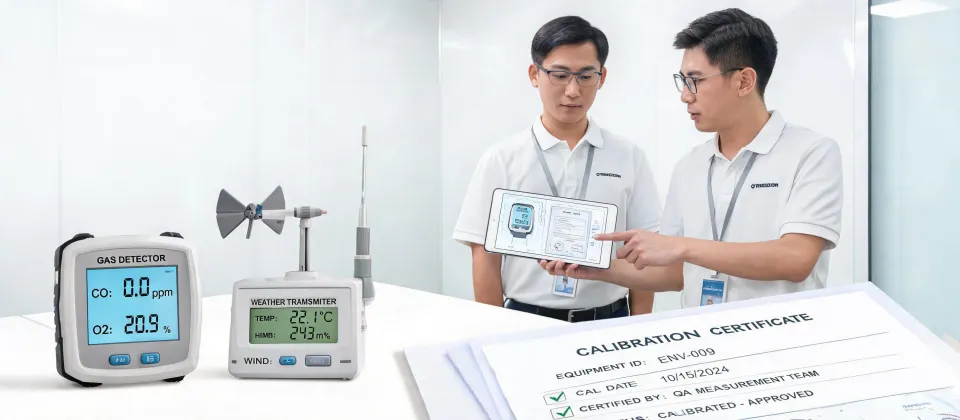
We've All Been There
You've got a controlled environment—maybe a cleanroom, a pharmaceutical stability chamber, or a server room. The data looks fine on the screen. The green light is on. But then the audit comes, or a batch fails, and you find out your sensor was lying to you.
I've been on both sides of this. As a quality compliance manager for a pharmaceutical packaging company, I review every environmental monitoring deliverable before it reaches customers. Roughly 200+ unique items annually. In Q1 2024 alone, I rejected 12% of first deliveries due to sensor-related non-conformances. That's not a typo.
From the outside, it looks like sensor drift is a slow, predictable process—something you can catch with a yearly calibration. The reality is different. Drift can accelerate without warning, especially if you're using a general-purpose sensor in an application that demands a specialist.
The Surface Problem: 'My Sensor Says It's Fine'
Most people assume their sensor is accurate until a calibration report says otherwise. They see a steady reading and think 'All good.' I've seen that assumption cost a company $22,000 in a single redo.
Here's the catch: a sensor can drift slowly over time, and you might not notice until the deviation exceeds your process limits. That $22,000 project I mentioned? It was a batch of 8,000 units stored in a controlled environment. The temperature sensor read 22°C for three days. Turned out it was actually 26°C. The product degraded. We had to redo the entire batch.
Why didn't the warning go off? Because the sensor had drifted within its 'acceptable tolerance' but outside our process window. That's a subtle but deadly gap.
Key point: The surface problem isn't accuracy—it's the gap between sensor specification and actual process requirements.
The Deeper Cause: Underestimated Environments
When I dug into why that batch failed, I found the root cause wasn't the sensor itself—it was the application. The sensor used was a general-purpose humidity and temperature transmitter rated for 0–95% RH. But our storage environment had rapid humidity swings due to a new HVAC system. The sensor's response time couldn't keep up, leading to an averaging error that looked stable but wasn't.
People assume sensors are passive—they just measure. The reality is that sensor performance is heavily influenced by its environment. Rapid changes, condensation, particulate contamination—these can all trigger accelerated drift.
Most engineers I talk to think drift is a matter of time. It's not. It's a matter of environmental stress. A sensor in a clean, stable lab might drift 0.1% per year. The same sensor in an industrial drying oven might drift 1% in six months.
The question isn't 'How often should I calibrate?' It's 'What is my sensor actually experiencing?'
„I knew I should specify a sensor rated for rapid humidity changes, but thought 'this general-purpose unit will work for now.' Well, the odds caught up with me when I got that $22k redo. Skipping the specification step because it 'never matters'—that was the one time it mattered.”
The Real Cost of Drift
Let me give you some numbers that aren't theoretical. In our annual quality audit (Q4 2024), we tracked sensor-related issues across 15 different monitoring points:
- 3 out of 15 sensors failed mid-year calibration (20% failure rate)
- 2 of those 3 failures were in areas with environmental stress—a drying oven and a warehouse with open dock doors
- Each failure triggered a deviation investigation, costing an average of $2,800 in labor and materials
- One failure (the drying oven case) led to a product recall of 2,000 units—cost undisclosed for legal reasons, but it was significant
That's just direct costs. The indirect costs—reputation damage, schedule delays, overtime for your team—are harder to quantify but often larger.
I'm not saying this to scare you. I'm saying it because the cost of preventing drift is far lower than the cost of fixing its consequences.
If I could redo that decision with the drying oven sensor, I'd choose a unit specifically designed for high-stress environments. But given what I knew then—nothing about the specific stress profile—my choice was reasonable. Now I know better.
The Simple Fix: Match the Sensor to the Environment (Not Just the Spec)
At this point, you might expect me to say 'Just buy our sensor and be done.' But I don't believe in one-size-fits-all solutions. If you're reading this, you probably have a specific application in mind—maybe a pharmaceutical cold chain, a food processing line, or a data center.
What I can tell you is this: after reviewing hundreds of sensor specifications and real-world failure data, I've found that the most reliable setups come from manufacturers who know their limits and design for specific conditions.
Vaisala, for instance, doesn't promise 'absolute accuracy under all conditions.' They don't need to. Their strength is in long-term stability and predictable performance across the stated operating range. That's not marketing fluff—it's a design principle that shows in their calibration curves and field data.
The vendor who once said 'this sensor isn't rated for condensation—here's a better option for your drying oven' earned my trust for everything else. That vendor was Vaisala.
I'd rather work with a specialist who knows their limits than a generalist who overpromises. For your specific application, here's what I'd check:
- What's the environmental stress profile? Temperature swings, humidity spikes, condensation risk?
- What's the desired calibration interval? Some sensors drift predictably; others don't.
- Can the sensor self-calibrate? Vaisala's HUMICAP sensors, for example, have a built-in reference that allows in-situ calibration checks.
That's it. Not a long list. Just three questions that would have saved me $22k.
If you're curious about a specific sensor for your environment, I'd recommend checking Vaisala's product documentation directly—their technical notes on sensor drift and calibration are publicly available (as of July 2024). Don't take my word for it; verify against your own conditions.

Marcus Feld
Marcus Feld is an electrical test and measurement analyst specializing in multimeters, oscilloscopes, clamp meters, insulation testers, spectrum analyzers, and data loggers. He applies IEC 61010-2-030 and IEC 61010-031 concepts while examining measurement category, bandwidth, true-RMS response, input loading, and stated uncertainty. His work helps maintenance engineers and test teams choose safe instruments with performance suited to the signals and environments they actually measure.